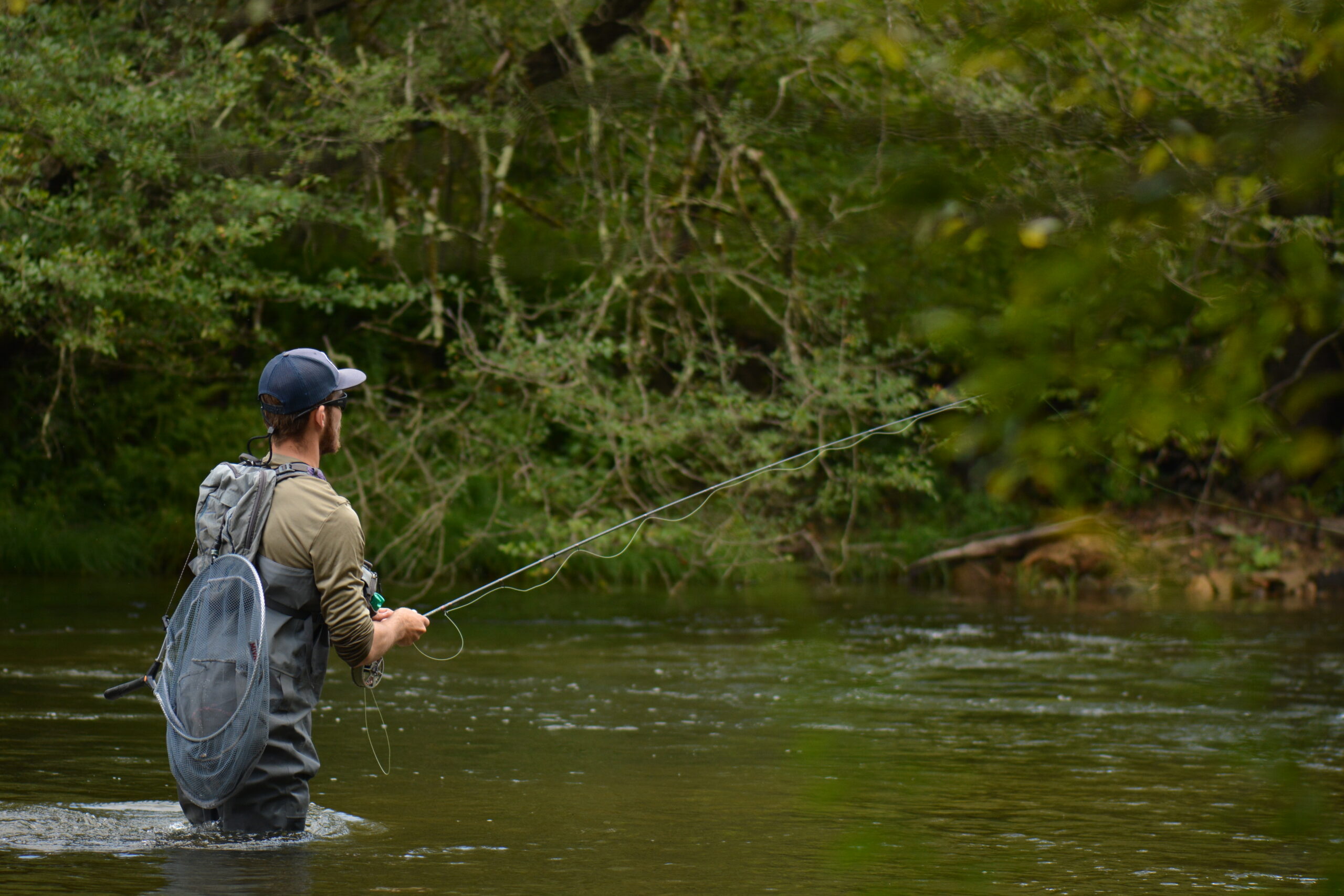

There’s pretty much no topic in fly fishing more polarizing than euro nymphing. You see arguments about it on social media, hear them in the fly shop, and might even catch some side-eyed glances if you’re doing it on the wrong river. It’s become one of the most popular tactics of the century, but there’s still a sizable faction of anglers with a real disdain for tight lining.
I understand having other preferred methods. Even though I love euro nymphing and talk about it more than anything else, I’ll always prefer fishing dries when the opportunity presents itself. What I didn’t understand for a long time, though, was why so many people looked down on it and flat-out refused to do it.
Over the years, I’ve heard the same arguments against it, again and again. After listening for over a decade, I can say pretty confidently that most anglers who don’t like euro nymphing feel that way because they don’t actually know what it is.
What Is “Euro Nymphing”?
In this article, I’m using “euro nymphing” to describe the family of long-leader tactics that don’t rely on a traditional fly line. You can fish light or heavy, tight or slack, with streamers, nymphs, or dry-dropper setups. You can fish thick leaders that cast almost like fly line or thin ones that require a cast all their own — whether they’re attached to a nymphing line or they’re forty feet of straight leader. You can even replace heavy flies with split shot.
As long as you’re not using a heavy fly line, a single dry, or an indicator, we can call it euro nymphing. Call it what you want — tight-lining, mono rigging, any anything else — but when anglers say they don’t like “euro nymphing,” they’re usually referring to all of these long-leader styles inclusively.
Euro Nymphing Is Too Effective for Its Own Good
Euro nymphing has done itself a disservice by being too effective. These tactics are, in many cases, a much better way to show a trout a fly it wants and detect the strike than any other method of fly fishing. Even when done relatively poorly, euro nymphing will often result in the equal or greater numbers of fish than comparable methods.
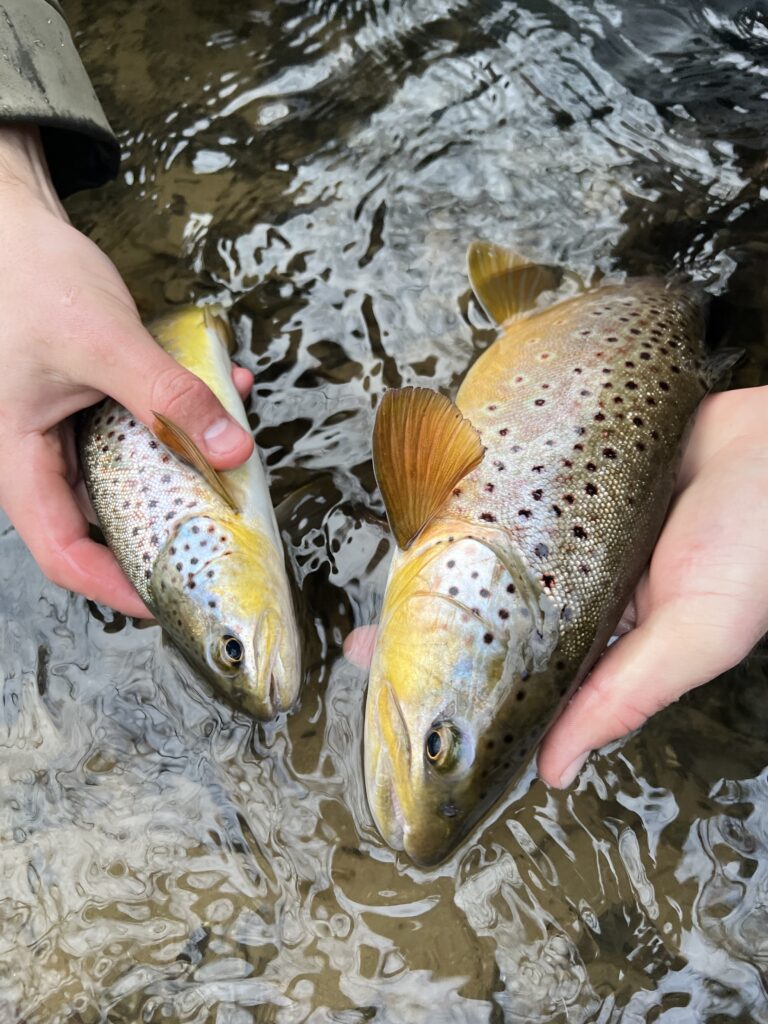
When you first start, you have to keep it basic — lob a heavy fly out and drift it under the rod tip. Without much feel for the cast or drift, there’s not a lot else you can do until you’ve logged some time on the water.
To put a number on it, most anglers start with about 5% of the total euro nymphing skill set. The thing is, euro nymphing is effective enough that this 5% still lets most people catch as many or more fish than they would otherwise.
If you took that same 5% of total knowledge of another technique, like dry-fly fishing, it’d be a different story. Being able to cast only fifteen feet and not knowing if your fly is drifting drag-free wouldn’t catch you much of anything. So, to make up for that, anglers are forced to learn more, to become more in-tune with the system and the fish. They may have to learn 40% of the total knowledge just to catch as many fish as they did with 5% of euro nymphing know-how.
Because of that, many anglers don’t realize there’s room for improvement or just how much more to euro nymphing there can be. They get stuck thinking the 5% they know is all there is. It’s not a hard conclusion to draw when you’re already catching plenty of fish.
Five Percent of Anything Is Boring
This, I think, is where the disdain for euro nymphing really comes from. The anglers who don’t like it are usually the ones stuck in that first 5%. They hate the monotony, the repetition, the lack of adaptability, the general absence of artistry that comes with doing it at a basic level.
I don’t blame them. If that were all there was to euro nymphing, I, and pretty much everyone else, would hate it too. But the same could be said about the first 5% of any fishing style. If you were stuck doing the same basic techniques all day, even dry fly fishing would get boring pretty quick.
Fortunately, there’s a lot more to long-leader techniques. There are countless casts, drifts, rigs, and subtle adjustments to learn. You can approach it scientifically or by feel. You can adapt it to endless conditions while being more connected to your fly, your drift, and the fish than with any other method.
I’ve been using these techniques for over a decade and still learn something new every time I go out. They have their own kind of elegance and beauty, different from conventional fly fishing, but just as real.

Anglers Love Being Complicated
There’s another factor that fuels this divide — fly anglers love overcomplicating things. Boxes full of patterns to match the hatch, vests packed with gadgets, long casts over complex currents. These details add depth to the sport and draw many people in, but they’re often unnecessary.
Euro nymphing flips that mindset. It shifts the focus away from those complications and onto the drift and the efficiency of the angler. It can get complex in its own way, but at its core, it’s refreshingly simple.
Some anglers mistake that simplicity for being too easy or mechanical. But in truth, you could fish any other style with the same straightforward approach and probably catch as many (or more) fish. That’s an uncomfortable thought for a sport built around complexity.
To some, euro nymphing feels like it strips away what makes fly fishing special. To others, it’s special in its own way. I’m not here to decide which is right, but it’s worth asking whether euro nymphing reduces fly fishing to something lesser, or whether traditional fly fishing is simply more complicated than it needs to be.
Final Thoughts
I’m not saying euro nymphing is the best method or that it’s all you should do on the water. This isn’t an attack on traditional fly fishing. Remember, it’s not even my favorite way to fish. Everyone has their preferences, and you should fish in whatever way makes you happiest.
And to be fair, I’m not denying the common critiques. It is often an easier way to catch fish because it’s so effective. It does strip away some of the unnecessary complications of the sport, and when practiced only at a basic level, it can get dull.
But here’s the point: euro nymphing gets a lot of undue hate for being simple, boring, or repetitive because many anglers don’t realize how deep it actually goes. There’s just as much to it, sometimes more, than any other method. You may have to shift your perspective and learn to find the beauty and artistry in different places, but I promise you, it’s there.
I’ll hop off my soapbox now — but I’d love to hear your thoughts in the comments.
Tight lines out there, however you choose to fish,
– Mike Komara