
Fly Fishing the Juniata River
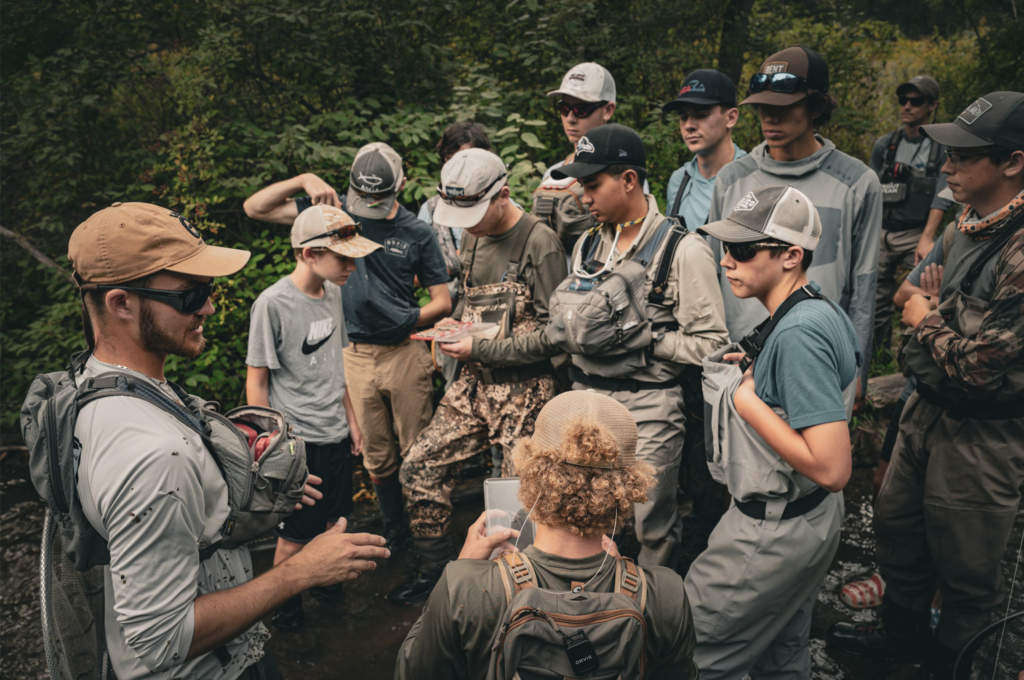
Innovative Angling Guide Service
Want some help out there? We offer full and half day guide trips on this and our other world class Pennsylvania waterways. We focus on education, so not only will you catch fish while were out, but you’ll learn the skills to go out the next day and catch more on your own. Give us a call, and we’ll work with you to put together a one of a kind trip to suit your specific needs.
Juniata River Fly Fishing
The Juniata is one of Pennsylvania’s best fisheries. Not to be confused with the trout fishery of Little J higher up in the system, the Big J is a high quality warmwater fishery full of bass, catfish, carp, and musky. It’s a massive river with an insane biomass due to the high quality limestone water that seeps in along its length and the high percentage of light penetration through the clear, shallow water. It is widely regarded as one of, if not the, best river smallmouth fisheries in the state. It’s also a river basically made for fly fishing, with easy to target structure, straightforward wading and floating, and numerous accesses along its length.
The Juniata from Top to Bottom
The Big J starts where the Little Juniata and the Frankstown Branch of the Juniata meet in Alexandria, PA. For the next three and a half miles to Warrior Ridge Dam the river is basically a lake, without much of interest to fly anglers. The fishing really starts below the dam, where the Juniata flows uninterrupted for nearly a hundred river miles until it dumps into the Susquehanna at Duncannon. There is so much to explore along the length that you could spend an entire lifetime answering still not learn it all.
The river picks up water from a lot of tributaries along its length, changing in depth and width significantly from top to bottom. The river takes some significant steps after some of the larger tributaries- the Raystown branch of the Juniata below Huntingdon, Aughwick below Mt. Union, and Tuscarora Creek in Port Royal. In general, the flow rate nearly doubles from the dam to the mouth.
Aside from the change in size, the river has relatively similar character along its length. It’s mostly shallow, less than four feet, with some deeper pools interspaced every half mile to three miles. It has mostly rocky structure with some wood along the banks, as well as some substantial weed mats. The weeds become more prevalent the lower in the system you go, and near the mouth will sometimes cover the entire river bottom from bank to bank for hundreds of yards.
One unique aspect of the Juniata is the limestone shelves that crisscross it in some sections. These shelves create some nice broken water where the run perpendicular to the flow, and good cover where they run parallel. In some cases then can be recessed two or three feet. The shelves make up some of the best holding water on the river and consistently put up some of the biggest fish.
Accessing The Juniata River
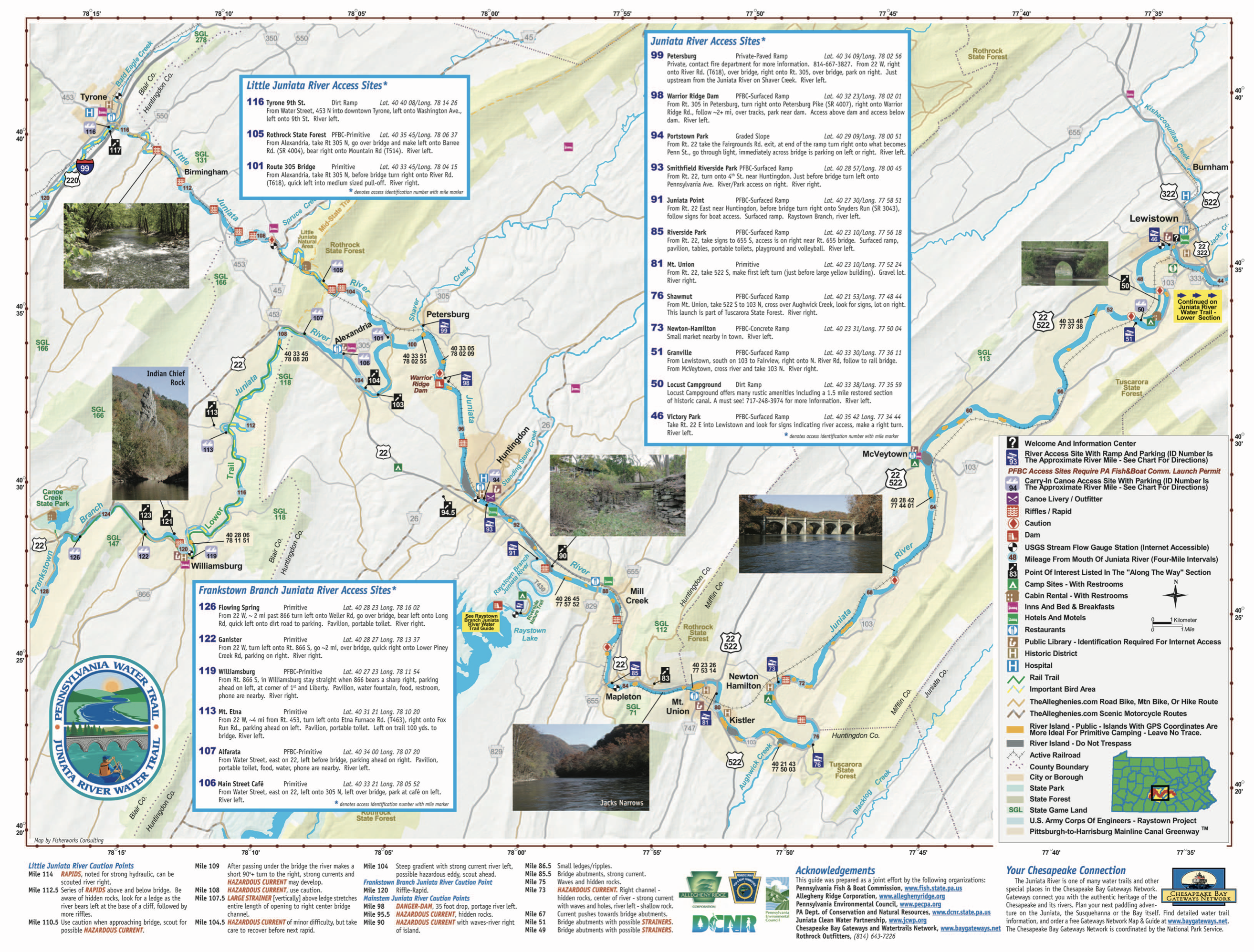
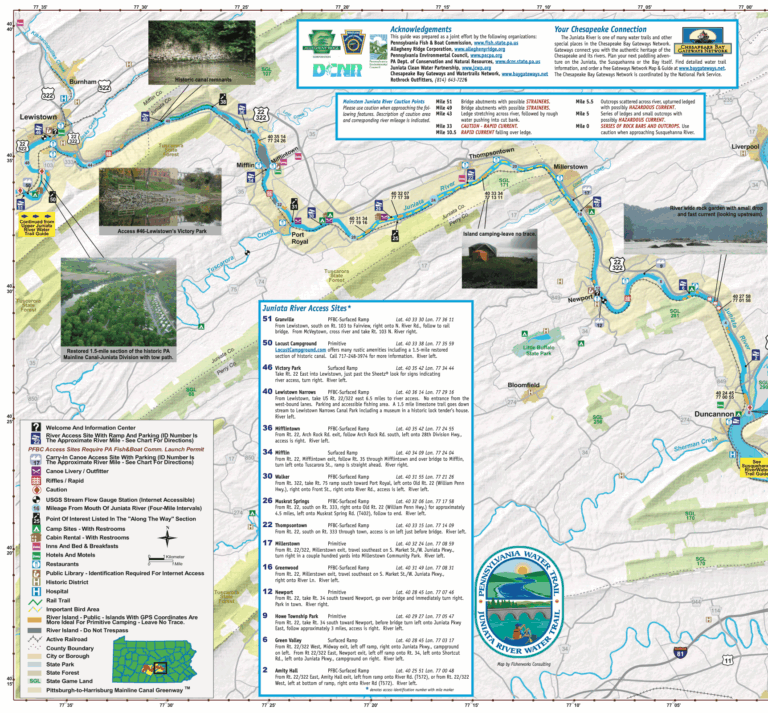
The Juniata is one of the most accessible waterways in the state, with boat launches (public and private fee launches) every two to eight miles and numerous wading accesses in between. This gives anglers the opportunity to fish virtually every inch of the river via boat or foot. Some of the river can be accesses by powered boats, and nearly all of it by a jet boat at the right flows. Still, drift boats, rafts, and kayaks will normally provide more access with less issues.
The Pennsylvania Fish and Boat Commission had done a much better job of mapping and describing the accesses than I could do, so I’ve included their maps here. The top one is for the upper river, and the bottom is for the lower. You can click on either to go directly to the website. There are plenty of other places to access the river on foot as well, too many to list out here.
Fishing The Juniata River
The Juniata is more of a numbers fishery than a size fishery, though it does put up a decent number of fish up to three and a half pounds, and some into the five pound range. In a full day of fishing, you can expect to have at least one or two eats from fish over fourteen inches. A normal summer day can produce thirty to eighty fish or more, with many being eight to ten inches.
It’s a pretty straightforward smallmouth fishery, and tactics don’t change too much from top to bottom. The bass have three main types of forage: baitfish, damsel & dragonflies, and crayfish. There’s plenty of other food in the river, but these make up a big percentage of the fish’s diet. All three are available through the main seasons (spring, summer, and fall) on the J, though damsel and dragonflies are most prevalent through the summer and early fall.
Though you can get as technical with the fishing as you like, swimming flies with some basic retrieve will always bring some decent success. Any medium sized baitfish patterns in olive, brown, or white will work well basically all year. Adjusting the weight so it swims mid column or a bit deeper will usually result in more eats than swimming it up high. Basic strip and pause retrieves are all you need, but mix up the cadence until you find what the fish are after.
In the summer, the bass focus in on the highly prevalent damsel nymphs, especially lower down on the river where there is more bottom vegetation. These probably make up as much of their diet as baitfish and crayfish combined in the peak months. A small #10-12 olive damsel nymph on light tippet retrieved with short strips will fool plenty of fish, including the big ones.
When the fish are picky, moving some crayfish flies across the bottom will usually do the trick. I stick with smaller patterns, nothing longer than three inches. One of my secret tactics is fishing them on a mono rig, similar to how you would fish a ned rig on a conventional setup. The unobtrusive, slow movement across the rocks is great for even the wariest of fish.
In the early morning and late evening, fishing poppers against the bank can yield some epic topwater eats. Anything from small bass poppers to four inch blockheads will pull fish, with the bigger flies being a great way to hunt for larger bass. Retrieve them with moderately hard, short strips and hold on! Smaller blue poppers that represent the damsel and dragonflies will catch fish throughout the day, but usually not as many or a large of fish as subsurface patters will. If you’re looking for some of the bigger fish, try fishing some larger baitfish patterns in the six to seven inch range. Flies that kick side to side with each strip tend to produce the most eats.
The main thing to keep in mind on the Juniata is that through much of the prime bass season the water is low and the fish are spooky. Don’t try and get too close to the fish, and watch how noisy your wading or rowing is. Long leaders, ten to twelve feet, are a must, and light tippets in the 2-4x range will result in more fish than heavy ones. Make gentler presentations and make sure not to hit the fish on the head with your flies when you get into one of the many sight fishing opportunities.
Top Flies
- Olive Damsels (#10-12)
- Hot Head Olive Damsels, orange or chartreuse (#10-12)
- Bunny Leeches, olive & white (#2-6)
- Critters, olive, brown, & rust (#8-10)
- Bouncing Craws (#2-10)
- Blockhead Poppers, olive & white, (#1-4)
- Blue Boogles (#6-10)
- Andino Decievers (#2/0-2)