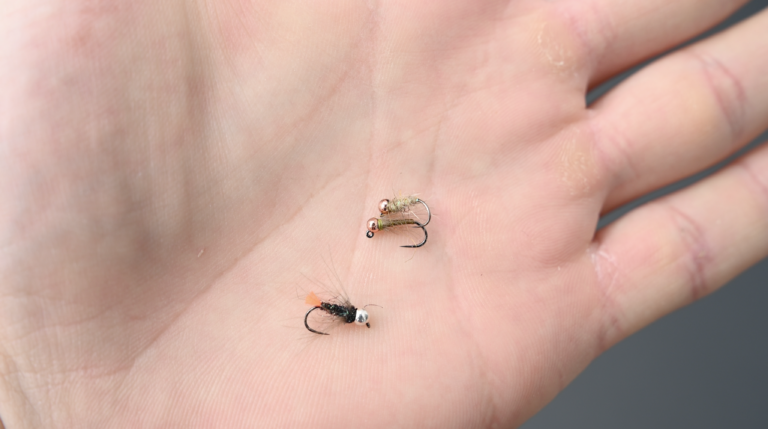
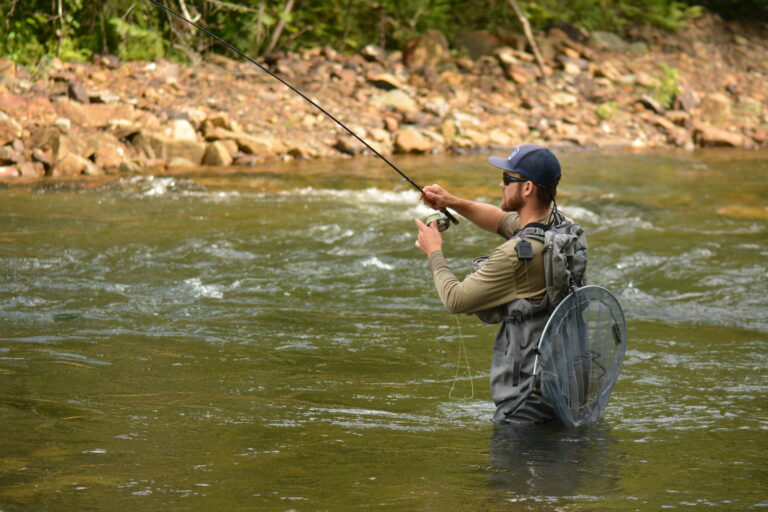
When it comes to Euro nymphing, lighter often means better. Light leaders sag less, which improves your drifts. Light tippets reduce surface drag and sink flies faster. Lighter flies drift more naturally, convincing even the toughest fish to eat. The tradeoff? Light rigs are hard to cast. Traditional overhead or oval casts lose efficiency because the air resistance overpowers the little energy your light flies and leaders carry.
That’s where the water load cast, or the frisbee cast if you’ve read my friend Josh Miller’s book, comes in. This technique lets you add power and distance without increasing the weight of your flies or the size of your leader. The above video details what this cast is and how to do it. I go pretty deep into some of the fundamentals, so you understand what you’re doing and how to adjust it for different situations. Below is a brief outline as well, if you want to come back for a quick reference.
What is the Water Load Cast?
At its core, the water load cast uses both the weight of your flies and the resistance of your leader and tippet against the water to load the rod. Instead of relying only on just the fly’s mass to generate momentum, you use the water tension to add energy to the cast. With the right technique, you can deliver incredibly light rigs 30 feet or more, all while keeping a natural presentation.
The cast itself has two main phases:
The Setup – where you position your fly and leader to define its eventual trajectory. I’m going to break it into two parts for this video, the fly setup & the rod setup
The Delivery – where you execute the cast to put your fly on target with accuracy and efficiency.
A Note on Leaders
The following instructions are designed for micro leader systems — leaders with a maximum strength of about 8lb or less. As you increase your leader diameter, the mass approaches and exceeds the mass of the fly, which shifts the dynamics of the cast. You can certainly still use the water load with heavier setups, but you may overload the rod and lose some finesse and accuracy.
Step 1: The Fly Setup
The fly setup is what truly determines where the cast ends up. This is explained by the 180-degree rule, which basically states that once your fly leaves the water, it will travel in a straight line through the rod tip from its starting point. Because light leaders can’t transmit much extra force to redirect the fly, its path is essentially locked in from the start.
Related Article: How to Improve Casting Accuracy with a Euro Rig (an article about the 180-degree rule)
That means you need to be intentional about where you place the fly behind you. Think of it as picking two targets: one behind you for setup, and one in front where you want to deliver.
It’s worth actually looking behind you during setup to pick a target. Even the most advanced anglers turn around to check their back cast position. Also, keep in mind that water movement behind you matters. A fly in fast current may drift downstream before you deliver the cast, so you’ll need to compensate by setting it up slightly upstream.
One quick trick is to glance at your leader. From a top-down view, the direction your leader points through the rod tip shows you where the fly wants to go. If it doesn’t line up with your target, adjust your setup.
Step 2: The Rod Setup
The rod determines the upward motion of your fly, and as a result how much slack (how much of a “tuck”) you get in your presentation. With a water load cast, you’ll always need a slight upward trajectory so that your fly doesn’t crash into the water
Trajectory is determined by the angle between your leader and the water’s surface. The 180-degree rule applies vertically just as much as horizontally, so the fly will follow the path upward your leader points through the rod tip.
Keep the rod tip relatively low, usually below chest level, to maintain control. Then, adjust the leader angle based on how you want your fly to land. A shallower angle gives a flatter presentation, less slack, and slower sink rate. A steeper angle with a higher stop stops the fly sooner, generates more slack, and gives a faster sink rate.
Finally, check the angle between the rod and the leader. If it’s too tight (90 degrees or less), you’ll struggle to align your stroke with the fly’s path because your cast follows an arc. Open up that angle slightly so the rod path can stay closer to a straight line.
Step 3: The Delivery
Once the fly and rod are set, it’s time to make the cast. Start by turning your body square to the target. Lock your hips in place, as moving them mid-cast can hurt your accuracy by moving the rod more laterally than you expect.
With this cast you don’t want a wide, arcing casting stroke. Remember, your goal is to move the rod tip in a straight line that matches the leader’s trajectory. Keep the stroke short, fast, and condensed, with a hard stop to transfer maximum energy.
Most of the power should come from your wrist. Keep your shoulder pretty much completely locked, and use your forearm sparingly, mainly to help remove slack on the back cast. Avoid shrugging your shoulders or leaning forward; those motions waste energy and reduce accuracy.
If you move the rod tip perfectly along the fly’s path, the fly will collide with it. In a perfect world where the fly could pass through the tip that’s what we would want to do, but in the real world we need to compensate for it. To prevent this, you have two options: throw the cast over or under the rod tip. To do this, you have to diverge your casting vector from the leader angle.
Over the rod tip – angle your cast vector slightly below the leader’s path.
Under the rod tip – angle the vector slightly above the leader’s path.
Both methods work; the best choice just depends on the situation.
Step 4: Putting It All Together
Here’s what a complete cast looks like in practice:
Choose a target and position the fly behind you, compensating for water movement.
- Double check the direction the leader is pointing through the rod tip to make sure it agrees with where you want the fly to go.
Set the leader angle by adjusting the starting height of the rod tip (for example, 45° for moderate slack and sink).
Cock your wrist slightly back and square your stance with your target.
Accelerate quickly with the wrist, keep the stroke short, stop hard, and send the fly over or under the tip.
Feel the “pop” as the fly hits the end of the leader, then watch it fall with slack on top.
After the energy dissipates, reposition the rod tip to hold the leader off the water.
The key here is timing — don’t move the rod tip too early. If you shift before the fly has finished its trajectory, you’ll rob the cast of power.
Step 5: Adjusting for Different Rigs
The water load cast is versatile, but you’ll need to tweak it for certain setups:
Two-fly rigs: Each fly obeys the 180-degree rule, creating a more chaotic system. You’ll need to add more deviation or arc to your stroke to keep things under control.
Heavier flies: They generate more load on their own, so ease up on power. Less acceleration prevents overloading and erratic rebounds. Heavy flies also sink quickly, so be prepared to start your cast sooner or lift them closer to the surface first.
Practicing the Water Load Cast
Try casting at different targets in varying currents. Experiment with leader angles to see how they affect slack and sink rates. Alternate between sending the fly over and under the rod tip to get a feel for both. Then, challenge yourself by practicing with two-fly rigs or heavier flies to learn how the system responds.
The water load cast may take some getting used to, but once you understand the physics behind it, you’ll find it’s one of the most effective ways to present ultra-light nymphs. With enough repetition, it becomes second nature. Your drifts will be more natural, your presentations cleaner, and your catch rate higher. If you want some in-person instruction to really hone your game, you can always reach out to book a lesson on the Guided Trips page.
Good luck out there!
-Mike Komara