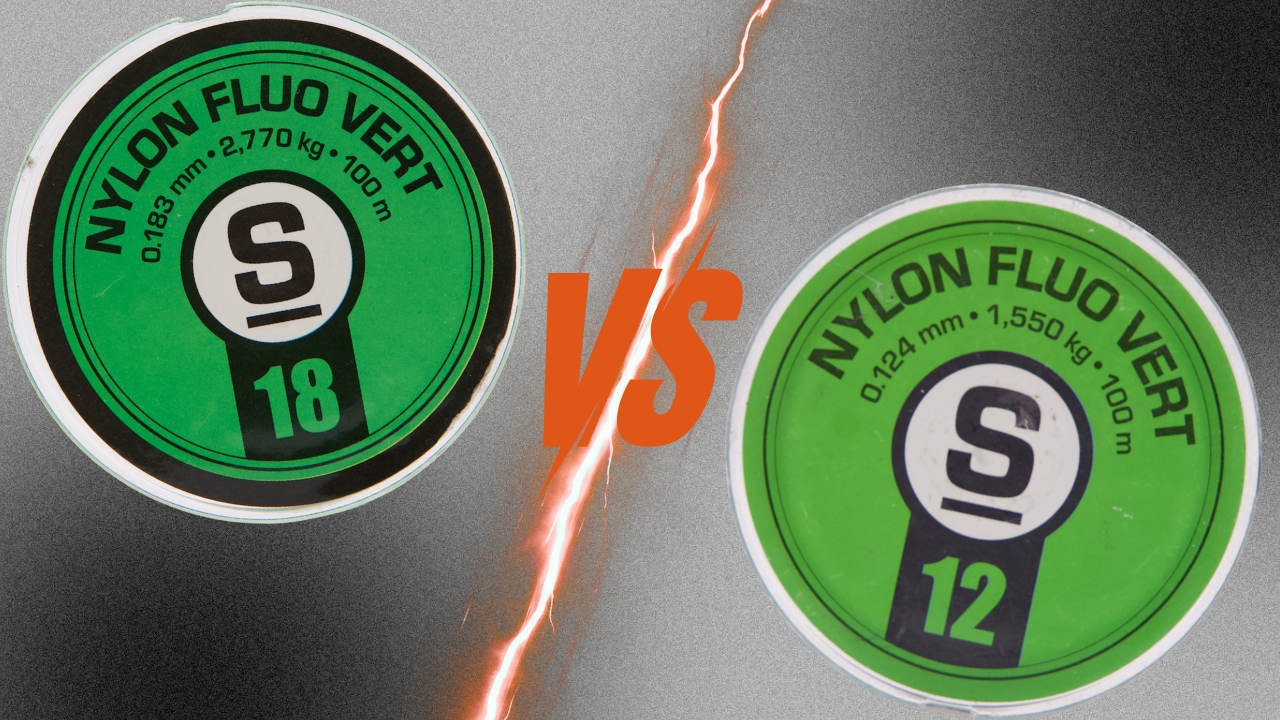

Micro Leaders have been all the rage in the euronymphing world for at least the last four or five years. They’ve quickly become the way the majority of anglers around the world are fishing, and for good reason- they offer a lot of advantages over a traditional tapered leader system due to their lower mass. Thinner is definitely better, but how thin should you really go? How do you choose a size for your leader?
The Micro Leader Problem
I was a pretty long holdout to the micro leader craze. I fished my 10lb butt tapered leader all the way up until 2023 when I began seriously trying to make Fly Fishing Team USA. I didn’t like the thought of losing the versatility to easily nymph, sighter float, throw dries, fight the wind, cast light flies, and a do a host of other things that required a thicker, heavier system. Eventually I did switch over when I saw how much better the micro leaders were for tight lining, but still missed the versatility of a heavier leader.
However, I’m lucky enough to fish with some great and innovative anglers, namely Josh Miller and Pat Weiss in this case, who had encountered the same issues and were working through them in their own ways. With some early advice from them and a few years of my own trial and error, I realized that many of my concerns about losing versatility with a micro leader stemmed from thinking of the system as only a single leader with a set diameter. By instead utilizing range of leader sizes based on the conditions, I could have a micro leader system that offered the most versatility possible for the day while still having the least sag possible for tight lining.
What Determines Diameter?
There’s a few things that I take into account when deciding what leader I’m going to fish for the day. The first two are tippet strength and wind speed. I call these environmental factors since they’re both products of the situation you’re fishing in, and they will supersede any other considerations for leader size. The next factor is casting (i.e. do you need the assistance of a heavier leader to cast light flies), and the final factor is technique.
Environmental Factors
Tippet strength was originally the only thing I thought about when choosing a leader size. It’s not something that you have to think about with any other fly fishing system since the leader is usually so much thicker than the tippet, but with a micro leader system you can easily run into a situation where you may want a tippet that’s stronger than your main line. For example, when I went to New Zealand over winter I needed a 0.16mm leader to fish the 5x tippet we needed to land the huge fish in ripping water, even though I would have preferred 0.12mm for the tactics we were fishing. Sometimes you have upsize so you can actually land the fish and sacrifice a bit of performance in the drift.
Wind speed is a bit less obvious of a factor, but just as important. The “wind resistance” of a leader is pretty much equal to its surface area to mass ratio. The higher the ratio, the more susceptible your leader is to being blown all over by a light breeze because it can catch more wind and has less mass to hold it in place. The surface area of a leader scales slower with diameter than mass, so the surface area to mass ratio is much greater with each step down in size. It’s important to remember it’s not a linear scale, so for example 0.12mm leader is significantly more susceptible to wind than 0.16mm.
Casting Factors
Casting is an important consideration when fishing lighter flies. The heavier the leader, the more it contributes to the cast. Some anglers, especially those newer to micro leaders euro nymphing in general, may need the help of the extra mass to get their fly to the target. This is perfectly fine, but limits the lower end of leader sizes you can add to your arsenal. This is one of the main things I see preventing anglers from fishing the really thin leader sizes like 0.12 or even 0.10mm. However with the right technique, you can cast a decent distance with any leader size and make casting a bit less of a consideration.
Techniques
The environmental and casting factors discussed above will narrow down the options you have for leader size, however the techniques you’ll be fishing for the day are what really determine what will work best. Let’s assume there’s no wind and you’ll be fishing 7x to small fish, so any size leader is on the table. In that case when I go to choose a leader for the day my main consideration what I primary tactic type is going to be: sighter floating or tight lining.
The thicker the leader, the more surface area it has and better it will be for sighter float tactics. On the flip side it will also have more mass and in turn be worse for tight lining because of the increased sag. The opposite is true for thinner leaders. If I’m going to be doing pretty much all sighter floating, then I’ll go for 0.18mm leader, and if I’m going to be mostly tight lining I’ll go for 0.12mm. If it’s going to be closer to 50/50 then I’ll use 0.14mm, which is a good all around size, and if it’s going to be a bit more float heavy then I’ll bump up to 0.16mm.
Like I mentioned earlier, mass doesn’t scale linearly with diameter. The mass of a leader, and therefore the amount of sag, scales with r^3. With that, we can say 0.16mm will have ~1.42x less mass and sag than 0.18mm, 0.14mm will have ~2.13x less, and 0.12mm will have ~3.38x less. So even though the size difference may sound small, you can get almost 3.4x better performance from the smallest option when tight contact is key.
There are also some scenarios where the fish don’t want a laser tight drift and ultra light leaders are more of a hindrance than a benefit. The tight connection can impart a little too much movement to the fly, or the fish may feel a bit too much tension and let go faster. Whatever the reason, in these situations a thicker leader with more sag and slack can be a benefit. This is a rarer situation but will change my leader out if I see this behavior during the day.
Conclusions
Micro leaders aren’t a one-size-fits-all solution. The real advantage of these systems isn’t just going thinner—it’s having the flexibility to choose how thin based on the conditions, the fish, and the tactics you plan to fish that day. By thinking of micro leaders as a range of tools rather than a single setup, you can preserve much of the versatility of a traditional leader while still reaping the performance benefits that make tight-line nymphing so effective. Start with the environmental constraints, account for your casting needs, and then fine-tune based on technique. Do that consistently enough to gain an intuitive understanding of what you need, and leader diameter stops being a compromise and becomes another lever you can pull to dial in better drifts and catch more fish.
Good luck out there, and stay warm!
-Mike Komara