

Every year across the U.S. (and much of the world), millions of trout are stocked into rivers, streams, and lakes by government agencies and private landowners. These fish, commonly referred to as “stockers”, are raised in hatcheries from eggs to stocking size.
While they are still trout, they often have different genetics and a vastly different life history than their wild or native counterparts. Because of that, they behave differently, and require a different approach to consistently target and catch on the fly.
Types of Stocked Trout
There are two main types of stocked trout: fingerlings and adult stockers. Fingerlings are typically four to six inches long and around six months old. These fish are released into fisheries where they are expected to survive, hold over year after year, and grow. By the time they reach a catchable size, they tend to behave much more like wild fish because they have learned the river and how to feed naturally.
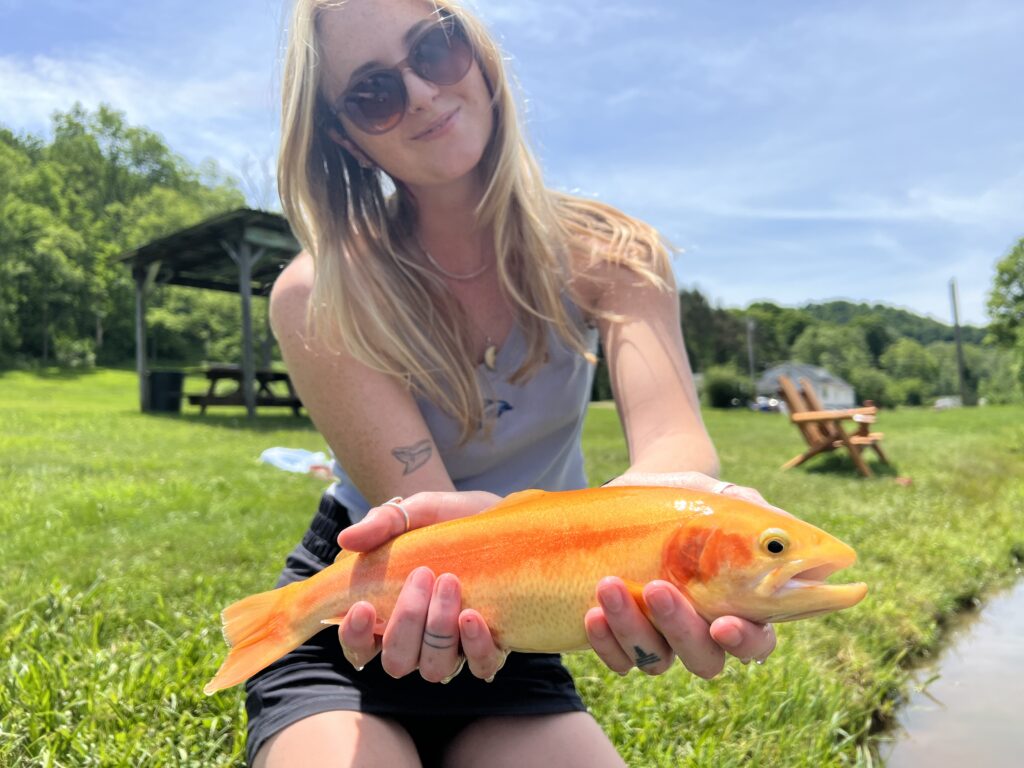
Adult stockers are usually one to three years old and measure between eight and sixteen inches when released. These are the fish most anglers are targeting, and they will be the focus of this article. They can be Brook Trout, Brown Trout, Rainbow Trout, or Cutthroat Trout. While there are some differences in behavior between species, the same general techniques will work for all of them.
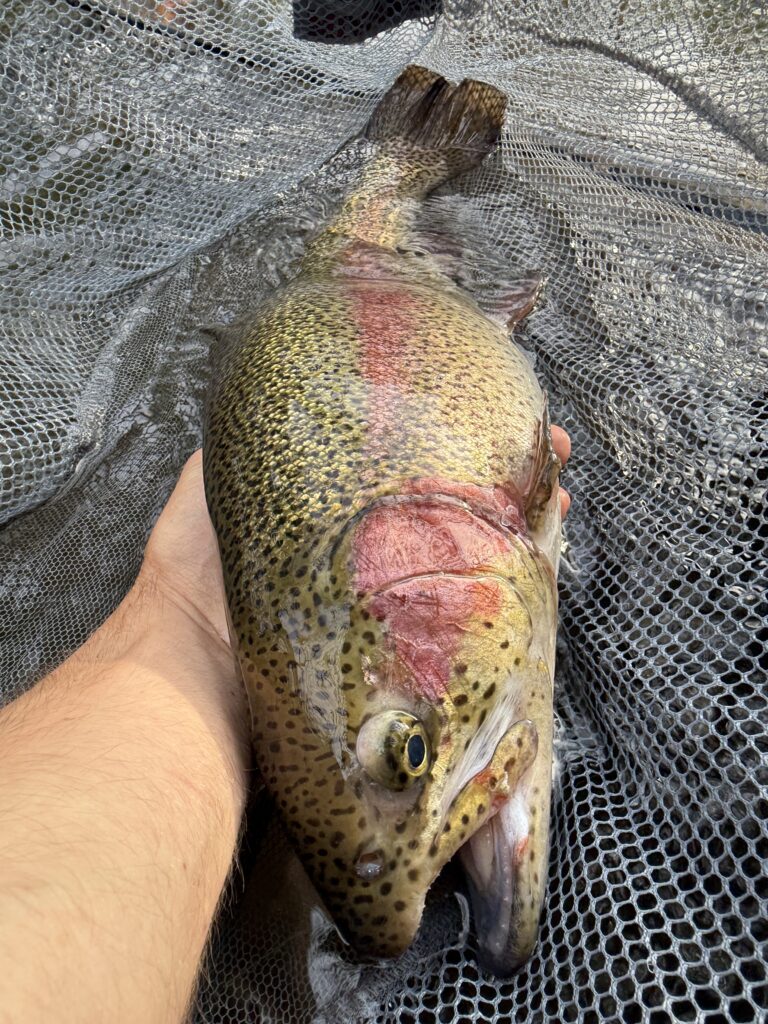
The longer a stocked trout remains in a river, the more naturally it behaves. Some fish adapt quickly, while others take more time. After spending a full season in the river, a stocked trout is often referred to as a holdover. These fish can begin to behave very similarly to wild trout, especially if they survive multiple seasons.
The Stocked Trout Paradox
Stocked trout are often considered easy or unintelligent compared to wild fish. That may be true when they are first introduced to the river, but it can change quickly. They lack the years of experience that wild trout rely on to make consistent, survival-driven decisions. Because of that, their behavior can be unpredictable. They can be erratic, easily spooked, and at times surprisingly difficult to figure out.
When they get pressured or uncomfortable due to conditions, they can get extremely tough. I’ve fished some wild trout waters considered to be the hardest in the world, and have local stocked rivers that get more difficult by the end of the season.
Where to Find Stocked Trout
Stocked trout are generally easy to find. They are most often released at easy access points such as bridges, boat ramps, and areas near parking. These locations are convenient for both stocking trucks and anglers. Some rivers are float stocked, where crews distribute fish downstream by boat or raft to reach less accessible water. Even then, fish are usually released into larger, easy-to-fish pools.
Stockers tend to stay close to where they are released, at least initially. They gravitate toward water that resembles the hatchery raceways they came from. Look for inside bends, pools, large pockets, glides, soft bank water next to heavier current, and deeper runs near access points. Because they are used to living in tight quarters, they often pod up. If you find one fish, there are usually more nearby. They also relate to structure that mimics raceway walls, such as straight banks, flat ledges, or hard corners.
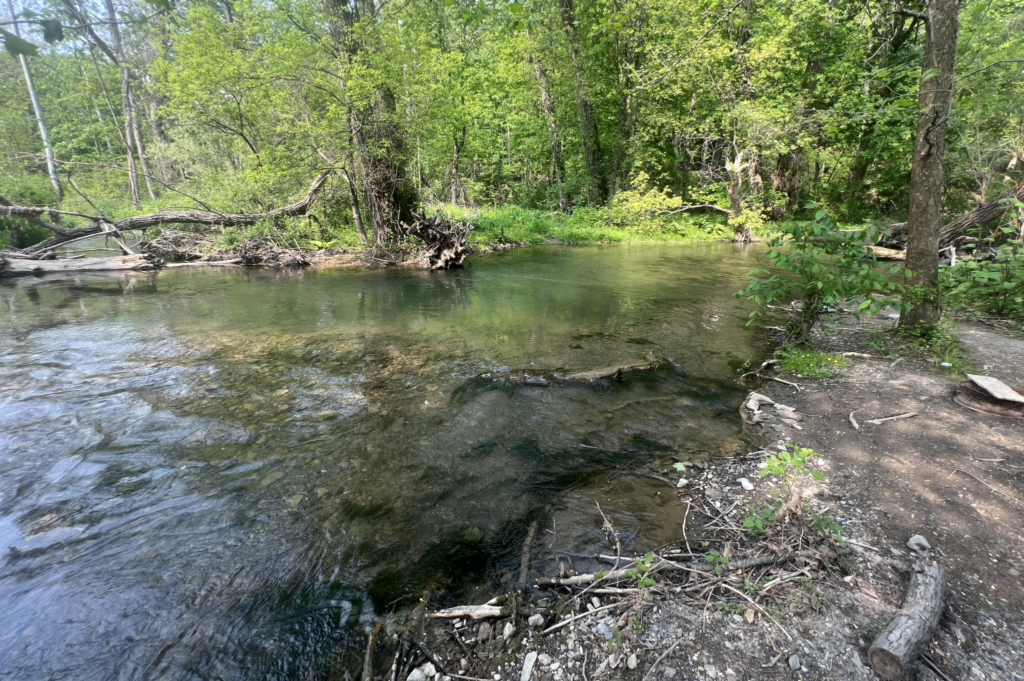
As they acclimate to the river, they begin to spread out and take on more typical trout holding positions, though they still favor larger, deeper water. With increased angling pressure, they disperse even further. This is when they often move out of obvious pools and runs and into riffles and pocket water.
After a few weeks of seeing constant pressure, stocked trout begin to seek out quieter, less obvious areas. At this stage, it pays to fish water that most anglers overlook. Unusual or less “ideal” holding water like back channels or skinny riffles can become productive simply because the fish are trying to avoid being harassed.
Stocked Trout Flies
Stocked trout can be either the least discerning fish in the river or incredibly picky. When they are freshly stocked, they are driven by curiosity. They are suddenly in a completely foreign environment without the only food they have ever known, hatchery pellets. They tend to test things with their mouths to see what’s edible and are attracted to a wide range of offerings. “Junk” flies like mops, eggs, and worms that catch the eye and look like they contain a bunch of calories are hard to beat for fresh fish.
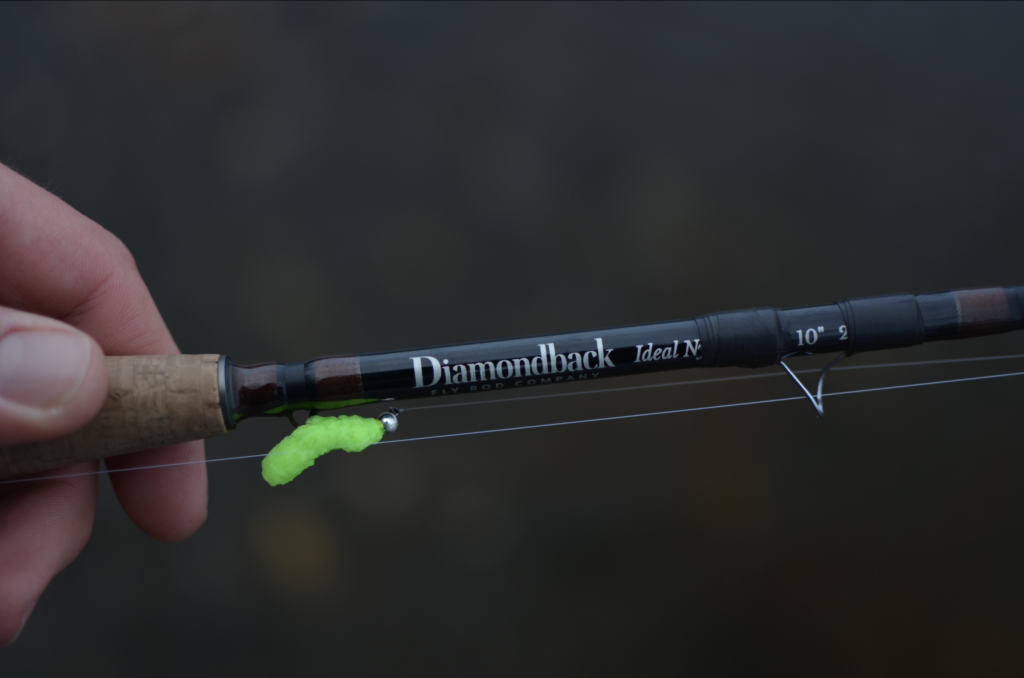
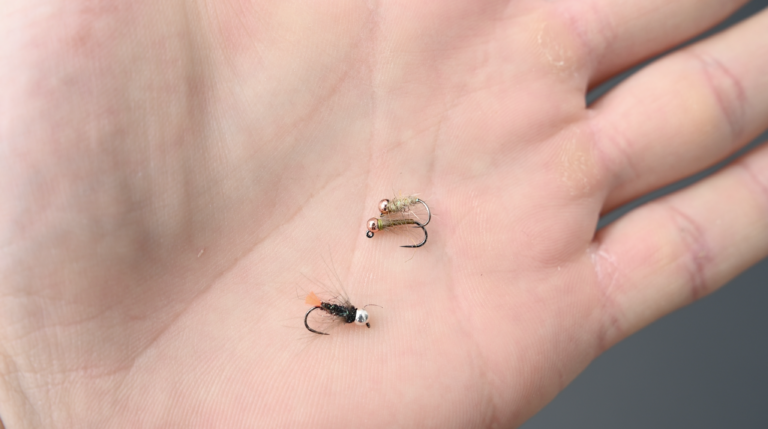
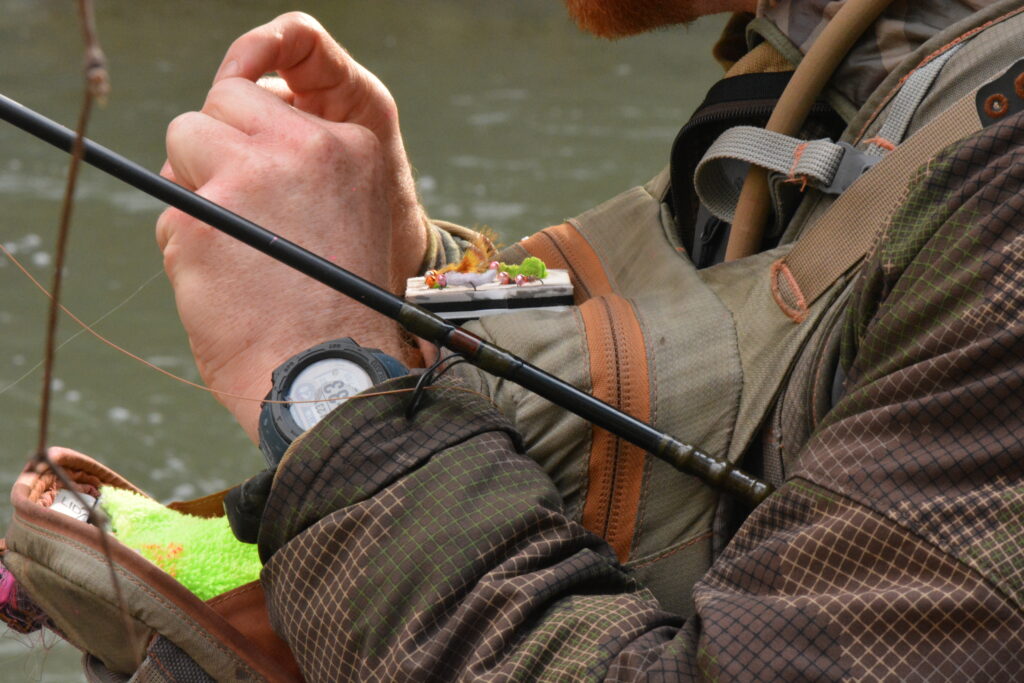
They also begin to recognize natural food sources fairly quickly, so more imitative patterns can work right away. Size 16 pheasant tails and Walt’s worms are reliable options for fish that are not responding to junk flies. Stonefly patterns such as a Pat’s Rubber Legs are also excellent for bridging the gap between natural and attractor styles. They offer size and movement without being as gaudy as something like a mop.
After a few weeks, and after seeing constant pressure from anglers, stocked trout often become more selective. At that point, matching the size and profile of natural food sources becomes increasingly important. Even then, they rarely lose their curiosity entirely, and brighter or more attention-grabbing flies will continue to produce at least a portion of the fish.
In general, stocked trout are more aggressive than wild fish and are more willing to chase a moving target. Streamer fishing is an excellent way to locate fish in featureless water and to trigger reactions from fish holding in pods. The added movement can convince fish to eat when they would otherwise ignore a nymph or attractor pattern. Small Woolly Bugger patterns in olive, white, or black, typically in sizes 10 to 14, are consistent producers. Tying them with a hot orange or chartreuse bead can help draw additional attention.
Stocked Trout Tactics
There are a million and one ways to catch stocked trout, but at the end of the day, it’s best to keep things simple. Euro nymphing or jig streamer fishing will usually be the most productive approaches, though indicator nymphing can also be very effective.
When fish are freshly stocked, they’re much more forgiving. You don’t need a perfectly drag-free drift to catch them. However, after they’ve seen a lot of sloppy presentations, and felt a few hooks, they quickly become wary of even slight drag.
The most important factor is getting your flies in front of fish, not just in the right location, but at the right depth. Freshly stocked trout tend to pod up and hold in the lower third to middle of the water column. Fishing heavy flies right on the bottom will catch some fish, but it can also put your fly below much of the pod. Adjust your depth constantly to keep your flies in front of as many fish as possible.
When covering water, it’s best to move more quickly than you would for wild trout. Fresh stockers (within the first month) will either be there or they won’t. Fish efficiently until you find one, then slow down and start working the area more thoroughly. Because they pod up, finding one fish usually means there are more nearby.
Once you locate fish, cycling through a mix of classic “junk flies” and a few natural patterns is key to catching as many fish as possible. Each fish has its own personality- while many may prefer a mop or an egg, others might only respond to a worm or a more natural imitation. Stocked trout also tend to lack the caution of wild fish, so if you miss one on a fly, it will often come back and eat something different.
It’s important to remember that freshly stocked trout operate more on curiosity than selectivity. Because of that, fly changes should be drastic. Switching from a pheasant tail to a perdigon often won’t make much difference. Instead, change profile, color, or size in a meaningful way, like going from a pheasant tail to a stonefly or a worm.
The primary adjustments when targeting stocked fish are location, depth, and fly selection. If you’re getting a decent drift, dialing in those three variables will lead to consistent success. While there are times to get technical, it’s usually better not to overcomplicate things.
If all else fails, try adding movement to your presentation. Subtle jigging, lifting, swinging, or even slight pulls can trigger otherwise inactive fish to eat.
As stocked trout spend more time in the river, they become increasingly selective. They never completely lose their hatchery tendencies, but they can become surprisingly difficult to catch. There are too many variables to cover every situation, but one rule always applies: never underestimate a stocker.
Final Thoughts
Stocked trout are often overlooked or written off as easy fish, but that mindset will cost you opportunities. At times they can be incredibly cooperative, but they can also become just as frustrating as any wild trout once they’ve been pressured and forced to adapt. The anglers who consistently do well are the ones who recognize how quickly these fish change and adjust their approach accordingly.
The biggest mistake you can make is overcomplicating things early, or refusing to simplify when the situation calls for it. Fresh fish reward efficiency. Cover water, vary your depth, and rotate through bold, distinct fly choices until you find what works. As those same fish settle in and begin to see pressure, the advantage shifts to anglers who slow down, refine their presentations, and start thinking more like they would when targeting wild trout.
If there’s one constant, it’s that stocked trout are driven as much by curiosity as they are by instinct. That unpredictability is what makes them both fun and challenging. Some days they will eat anything that passes in front of them, and other days they will refuse everything you throw. Being willing to experiment with location, depth, fly selection, and presentation will always put you in the best position to succeed.
At the end of the day, stocked trout are still trout. The more time they spend in the river, the more they behave like the fish we all enjoy chasing. If you approach them with an open mind and adjust as conditions change, you can get the best of both worlds: high catch rates and legitimately challenging fishing.
Tight Lines,
-Mike Komara