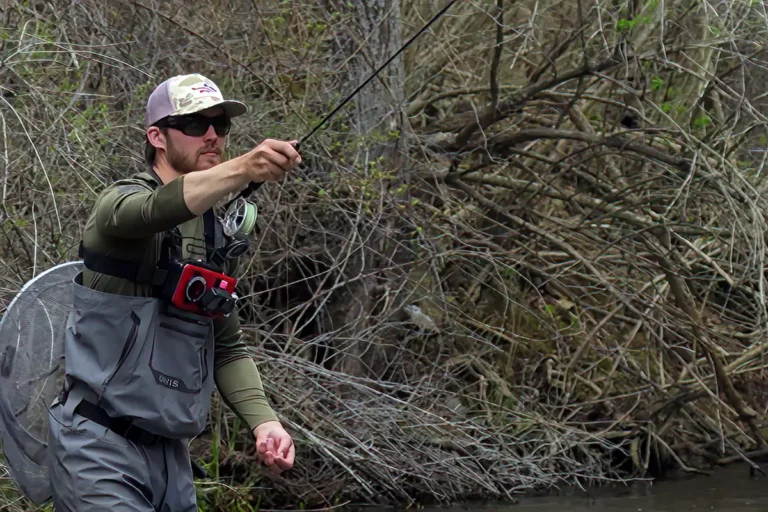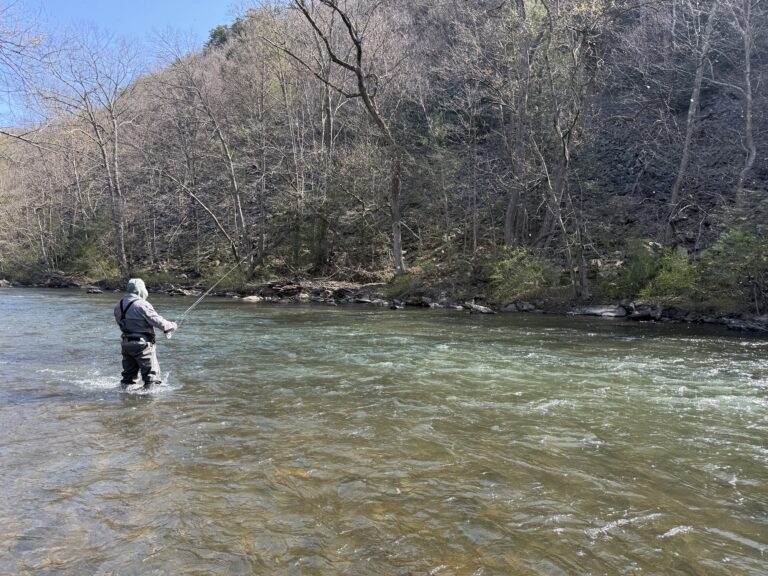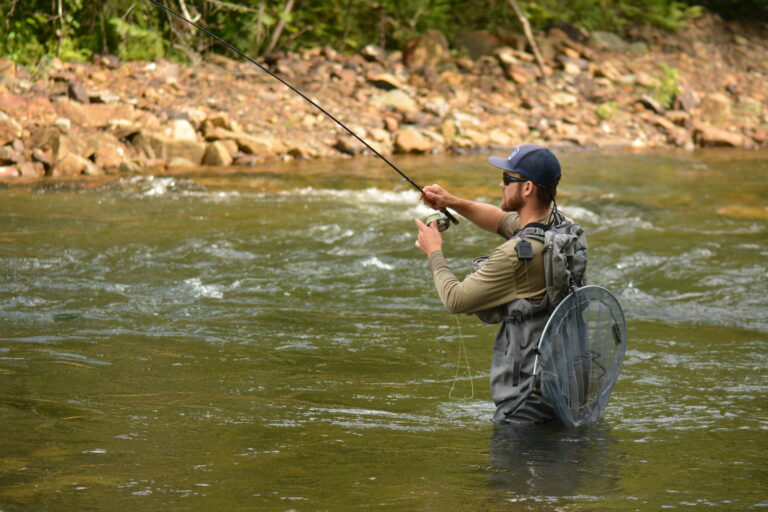

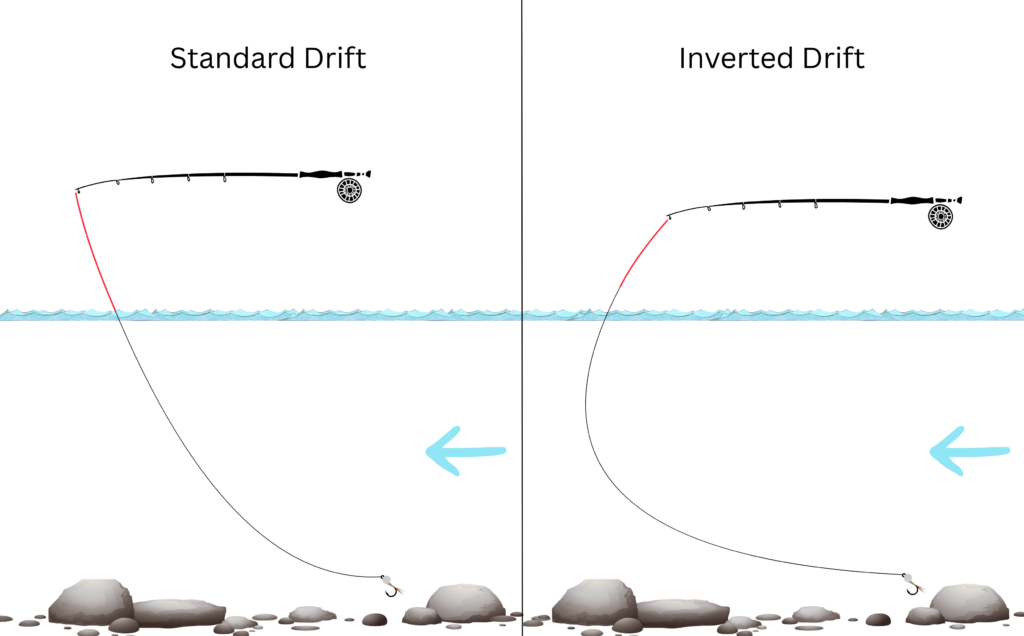
If you euro nymph, then you know what a standard drift looks like. There are countless variations to it, but in general it looks something like this, with the angler leading the rod tip downstream first, and the sighter pointing upstream towards the flies.
As an angler you have a lot of control over this drift- you can change the angles from super shallow to basically vertical, you can vary the speed you move the rod, and you can manage how much tippet or leader you let sink in the water.
The standard, upstream sighter angle drift is great and is going to catch you fish in a ton of different scenarios. But there’s another way to drift that many anglers don’t know about or utilize- the Inverted drift.
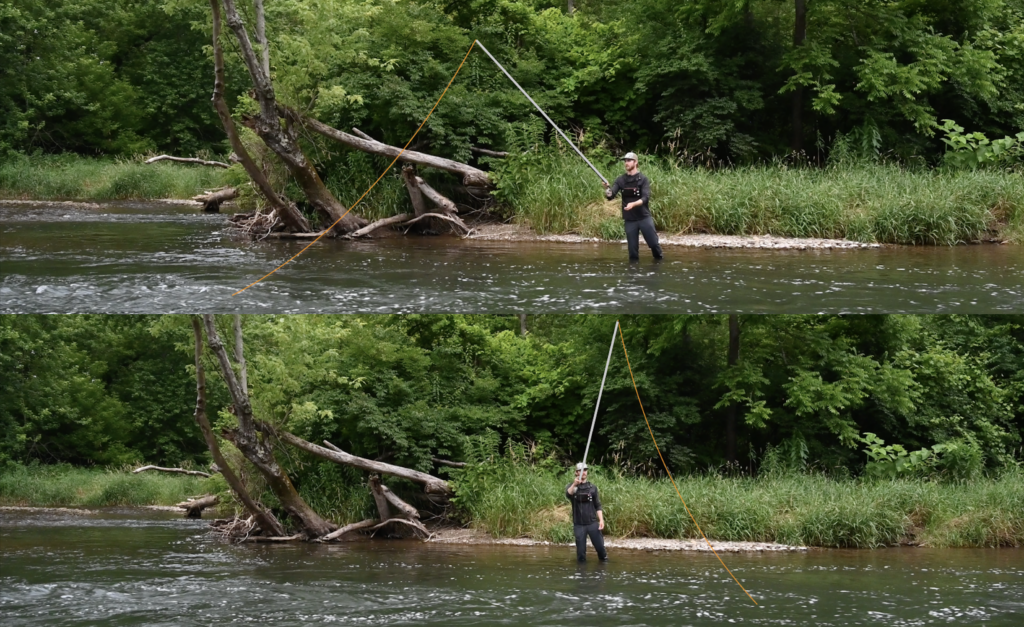
In this style of drift, instead of the rod tip tracking downstream in front of the sighter, and the sighter pointing upstream, everything is reversed. The rod tip moves slower than the sighter, and the sighter flips so it points downstream.
It sounds funky, but in some situations inverted drift will catch you exponentially more fish than a standard one, so it pays to learn it. I use this drift quite literally every day that I fish. Some days it may only be 10% of my drifts, others it may be basically the only drift style I use and account for every fish to the net. It’s incredibly important in cold water, for moody fish, or to drift in tough, complex currents.
What is an Inverted Drift?
The inverted drift is a method to get your fly moving deep and slow. It is the slowest drift you can make, and on many days that’s what at least some percentage of the fish want to see.
It works like this:
In a standard drift, we have to move the rod downstream faster than the flies to maintain the upstream angle of the sighter. Even if you have some slack and are maintaining a belly through the drift, there is still some additional tension from our input, on top of the tension of the water, that is slightly increasing the speed of things.
With an inverted drift, we try to reduce some of that additional tension from the angler input. If we take a look at a standard drift, we are managing it by taking up slack as it is generated by the rod tip. In an inverted drift, we’re doing sort of the opposite. Instead of leading the fly downstream by moving the rod tip faster than the flies, we let the flies sink and bite into the slower bottom currents, hold the rod tip steady, and allow the current to put tension on the system as it all unfolds pointing downstream. We then manage the drift but feeding in slack from above, instead of taking it up from below.
With that, we can move the rod tip downstream slower than in a standard drift, closer to the fly speed, and allow the current alone to provide the tension to stay in contact with the flies and keep them moving downstream, reducing additional tension from the angler.
It’s important to note that in an inverted drift, the flies are not downstream of the tip of the sighter. Just like in a standard drift, they remain upstream- if they were downstream the drift would not be at all slow or controlled. The main difference is a change in the orientation of the tippet.
Instead of sloping gently up toward the sighter like in a standard drift, in an inverted drift the tippet curves back around like this.
My Teammate Devin Olsen just did a great video demonstrating how this works underwater that may help you visualize it, linked here (at 11:40): How Changing Leader Angles Changes your Euro Nymphing Drift
The Basic Inverted Drift
The most basic version of an inverted drift is an addition to the end of your standard drift. Many anglers are doing this or something similar without fully understanding what it is or why it works. If you ever have a day where you’re catching the majority of the fish at the very end of your drift, it’s probably because you’re inverting it at the end. .
The standard drift has a few parts. The first part is right after the cast when the fly is sinking to the bottom and you are just managing slack- around the first 10-25% of your drift. The second part is the body of the drift where the fly is moving downstream in a controlled manner- around the middle 50-70% of your drift.
This second part lasts until the rod tip is between 20-30 degrees below your position, whenever you start to run out of room to keep your tip tracking straight downstream.
Many people instinctively slow or stop their tip movement and reach out at the very end to try and squeak some more dead drift out of their flies.
This point at the very end of your drift, when you slow or stop your rod tip and the sighter drifts below it, gives a second of reduced tension that allows your flies to bite a bit deeper and slower into the bottom current right before the tension comes back and the flies pendulum up towards the surface, giving you maybe 6-24 inches of deep slow inverted drift.
Inverting the Drift Earlier (The Hybrid Drift)
We can pause the rod tip at the very end of the drift and crawl the fly extra slow for about a foot, but if that’s where we’re catching most of our fish, why wait all the way until the end to start it?
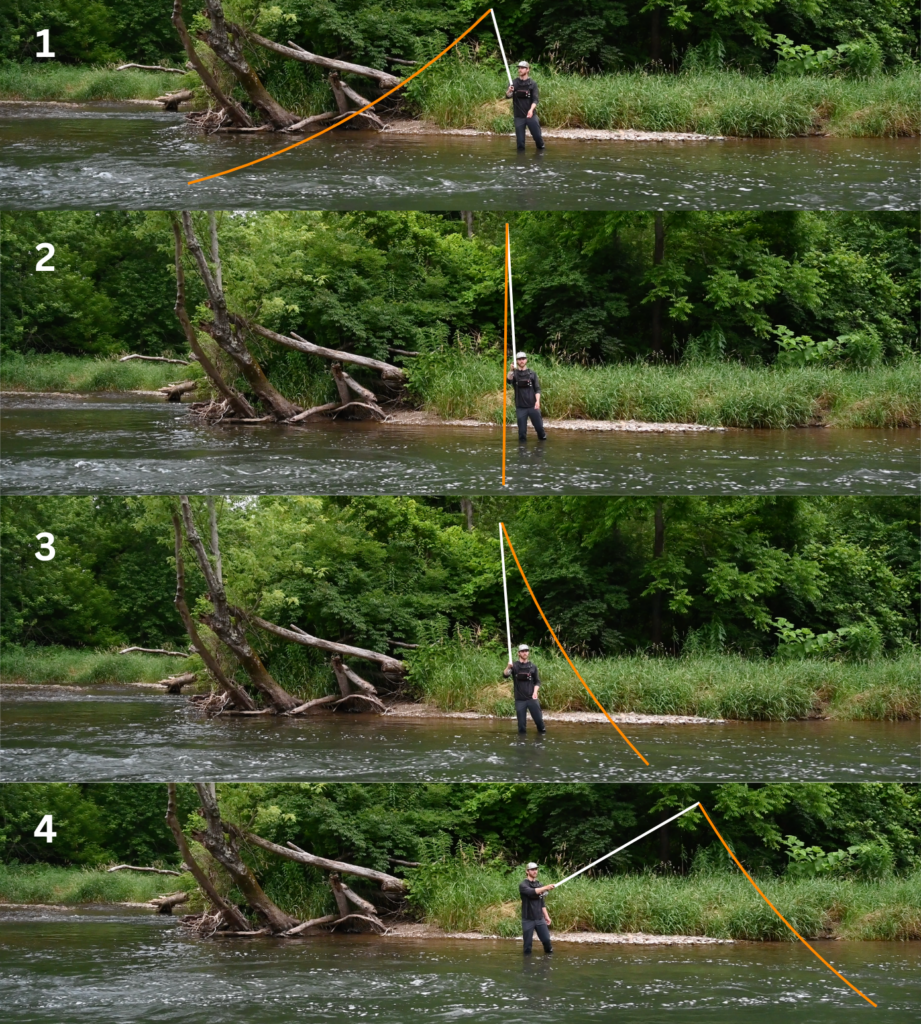
You can invert the sighter earlier in the drift by pausing the rod tip sooner, say when it’s directly out from you or a few degrees upstream, letting those flies really stall out, and then moving the rod tip down and downstream at an appropriate speed. This is what I would call a hybrid drift.
To do it well you have to set things up properly. When I’m planning on inverting my drift for a longer period of time, I manage slack more by raising the rod tip than by bringing line in with my line hand than I normally would.
The more leader you have out of the rod tip when you go to invert the flies, the more slack you have left to feed into the system, and the longer the drift you can get. Of course there’s a limit- you still need to be able to set the hook if a fish eats, but I raise the rod tip high enough to be right on that limit.
So what this looks like:
- Make the cast as you normally would
- Start by leading your drift down, and get a few feet of “standard” drift
- As that drift is coming towards you, prioritize moving that rod tip up to take up slack and manage any additional slack with the line hand
- As the rod starts to get to the point you want to invert the drift, a bit upstream or straight in front of you, bring it to a hard stop
- As the fly is dropping deeper and slower and the leader is swinging under the tip, don’t move the rod downstream at all.
- If you want to speed up the process of getting in contact, you can actually slowly and gently move the rod tip upstream to more quickly position it above the sighter and invert things.
- If you need to manage any slack to keep the sighter from hitting the water, do so by raising the rod slightly higher or bringing more leader in
- Once the sighter inverts and the system is under some tension from the current, start following it downstream and slightly lowering the rod at a speed that roughly maintains the sighter angle and the distance of the tip off the water surface
- Moving the rod down at around 45 degrees tends to work well
- Once the rod tip gets to around that 20 degrees below you, start adding slack solely by lowering the rod tip. You want to avoid dragging the tip across currents.
- You can fish this drift pretty far below yourself. Once the fly starts lifting up at the very end of the drift, recast.
- One important thing is when you set the hook on this drift, because of how things are set up, you want to set more vertically to be in touch with your flies faster
Making a Full Inverted Drift
The hybrid drift we just talked about is great for when fish are eating multiple types of presentations. It allows you to fish the drop of the flies, keeps you in better contact in the first part of the drift for more active fish, and then slows things down for less active fish through the last part.
But there are days, especially mid-winter or other times the fish are moody, where inverted drifts are basically the only drift the fish want to see. When that’s the case, I invert the drift from the beginning instead of “wasting” part of my drift showing the fish something they don’t want to see.
This won’t look too different from what we talked about in the hybrid drift, with the big difference being how early you stop the rod tip.
For a full inverted drift, I generally don’t cast quite as far upstream as I normally would. Instead, I make a shorter cast, stopping the fly high and allowing it to fall straight down with plenty of slack so the flies sink fast.
You still want a decent bit of line out of the rod tip to get a nice long drift, so don’t cast short by having a short line, do it by stopping the fly at a shorter position with a longer length of line out.
Once the flies hit the water, again either hold the rod tip steady or drift the tip gently upstream to speed up the process of inverting the sighter. If you need to manage slack, do it with the line hand or or by raising the rod tip vertically.
Wait for the sighter to fully invert and come tight, then begin following the sighter down just like you did in the hybrid drift. In general, I find my clients have to wait longer than they expect before moving the rod tip down. If you start too early, before tension sets in, your drift won’t slow down properly.
After that, everything is the same as the hybrid. You’ll be able to get an inverted drift between 10-15 feet long or longer, depending on how much leader you have to work with.
Final Thoughts
The inverted drift is an often overlooked but incredibly important technique. It’s never had the spotlight shown on it that many other euro techniques have, and I’m not quite sure why. It’s responsible for a massive number of my fish every year, and is one of the best techniques for fish that don’t wanna eat or dealing with tricky currents. Give it a try, and let me know your thoughts. If you decide you need some extra help, feel free to reach out and ask questions, or to book a trip with me to learn it in person.
Tight Lines,
Mike Komara