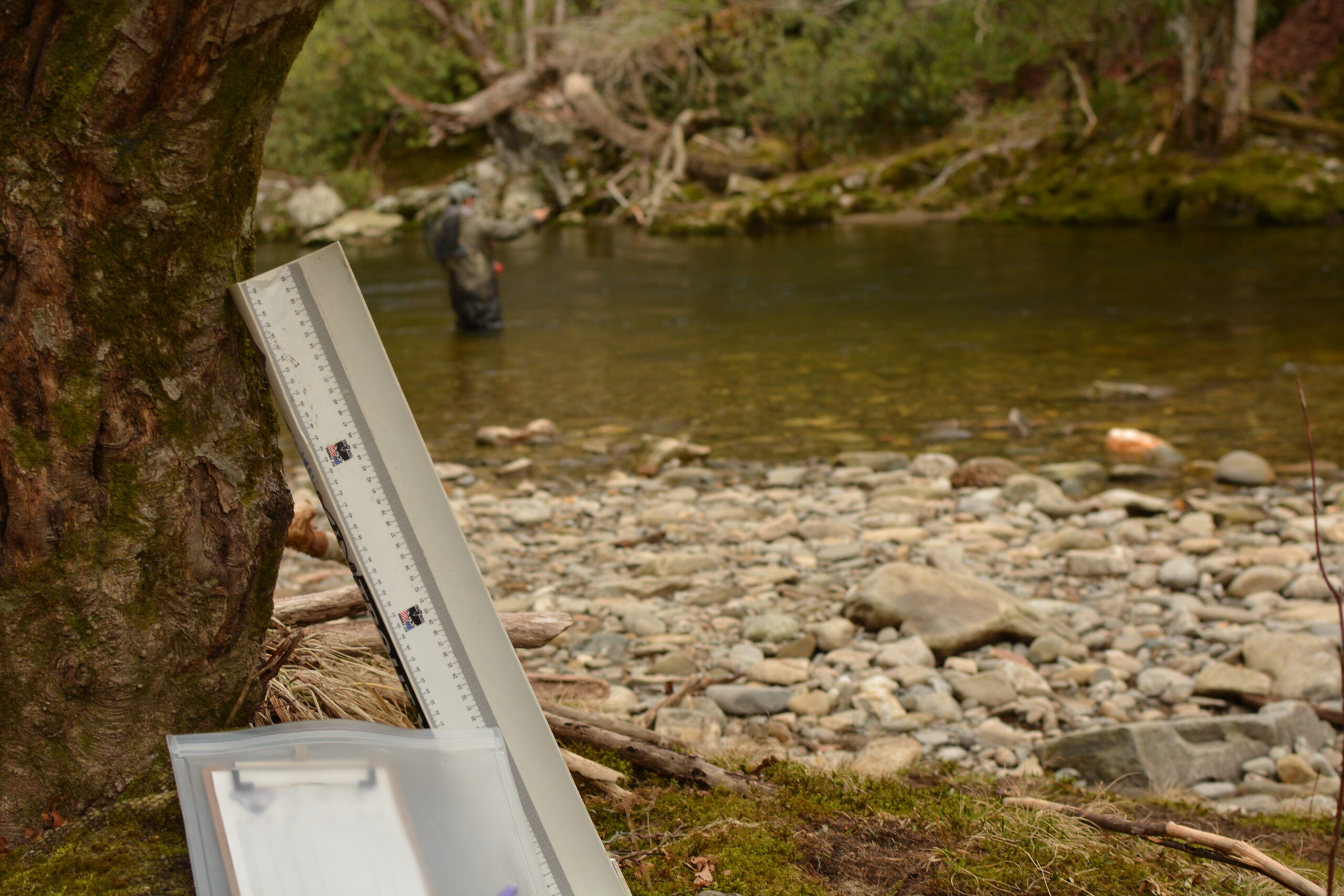

In competitive fly fishing, anglers aren’t free to fish whatever rigs and tactics they like. There is a set of rules, put together by the international governing body of competitive fly fishing, FIPS Mouche, they must follow. These rules dictate what leaders, flies, and equipment are allowed, and what is considered fly fishing for the sake of the competition.
I recently got a message from a follower asking how I would fish if I didn’t have to follow the FIPS rules. What, if anything, would I change to be more effective on the water? It’s a great question, and in truth there’s a lot I would change. For this article, let’s assume I’m still in a competition. I still have a beat, a controller, I’m fishing for numbers and being scored the same way, but I have no limits on what or how I fish—what would I do differently?
Rods, Lines, and Leaders
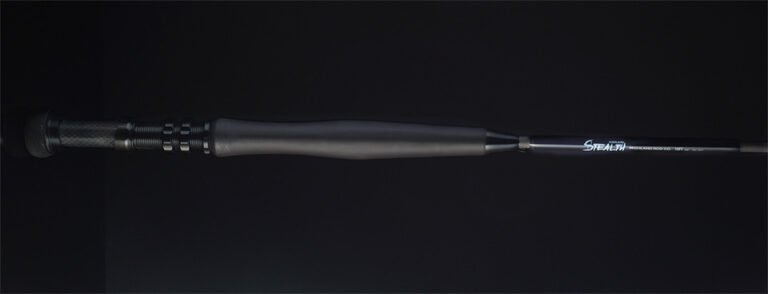
The FIPS rules regarding rods are minimal—they just have to be under twelve feet. Rods longer than that are unwieldy and tip heavy, among other issues. I would definitely stick to my nymphing-specialized 10 to 10.5-foot rods given the choice.
Leaders and lines are a different story. Under FIPS regulations, a leader can only be twice the rod length. It also must be connected to a fly line, which they define as a coated line at least 0.022” in diameter. The euro lines that have become popular for fishing the technique are basically a workaround for this rule. For nymphing alone, they offer little besides minimizing the weight of the line while staying legal.
That being said, I would actually keep the euro line. Even though it doesn’t do much for nymphing, I have a very effective dry fly system I fish off of mine, so I would leave it on my reel and switch to it with a dry fly leader if needed.

I would, however, be nymphing with a fifty-foot leader tied off to it. Dealing with the hard transition and hinge from a light leader to a much heavier fly line is probably the most annoying thing about fishing under FIPS rules and puts huge limits on the distance you can fish. A super-long leader means you can fish as far away as you want and never have to deal with it.
What I would not change is the specific leader I’m using. I think the untapered 0.12–0.20mm (3–6x) micro leaders used by most competitors these days are without a doubt the best nymphing tools available today. There is nothing else I know of that can compete. They have their limitations, but the trade-offs are worth it for the improved sensitivity and drift performance. If I needed to throw a dry fly, I would switch to a specific leader or have another rod with me, like I already do.
Indicators and Split Shot
Probably the most infamous set of competition rules is that any suspension device that’s not a fly (strike indicators) and any external weight (split shot or tungsten putty) are banned. This has had a big influence on competitive tactics, however less so than most people think. Had they not been banned, they would certainly have their place for specific situations, but I believe tight lining with micro-leader systems still would have emerged as the most productive all-around tactic.
Indicators
Indicators would certainly have a place in my pack if they were allowed. I would pull a yarn or wool indicator out any time I would currently use a dry dropper as a nymphing presentation, not expecting eats on the dry. This would mainly be for slow, shallow flats, winter pocket water, or fishing light nymphs in deep holes. The adjustability and efficiency of these indicators over a dry is hard to beat.
I would also use the same indicators, or potentially a larger foam indicator, when trying to fish far away over water I can’t cross. Trying to fish a nice slow eddy across a torrent of water on a big river or drift the far side of a giant slow pool without a suspension device to anchor you is no easy task.
I would still tend to float the sighter in most situations an indicator may be useful, solely for the sake of efficiency. A lot of my presentations incorporate both the leader on and held off the water in a single drift, as well as on-the-water manipulations that can’t be done with a suspender on the line. You also can’t go as efficiently between presentation types when using an indicator, which is just a general time suck. Overall, I’d probably be using an indicator somewhere around 15% of the time.
Split Shot
I would definitely be carrying split shot (or tungsten putty) if I could use it as well. It would rarely find its way on my rig the way many people use it above the fly though. This may be useful for very quick, temporary weight changes, but it’s no good for bite detection and doesn’t offer much more speed than just changing out the fly.
What I would use it for is drop-shot rigging. Drop-shotting is an incredibly effective and versatile technique and opens up some new methods for covering water. It can be useful in pretty much every water type besides tight pocket water, but is specifically helpful for fishing light or small flies at a distance or in heavy water.
By adding more weight, it also allows you to fish at exceptional distances and tight line across heavy currents on big rivers. That being said, a drop-shot rig still doesn’t offer the level of immediate, direct contact or speed of change as fishing weighted flies. It also isn’t great for fishing shallower water and requires a more complicated and slow rigging. If I had to guess, I would be drop-shotting 20% of the time if I could.

Flies
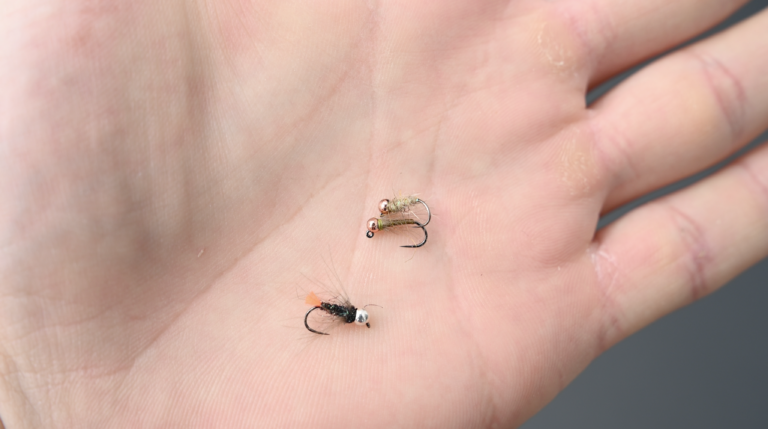
There are really not too many rules regarding river flies in competition. The only ones that really affect what we fish are: no visible weight besides a tungsten bead less than 4mm in diameter, no rubber or molded body flies (no squirmies), and no barbed hooks. There are also some size limitations, and we can’t fish articulated flies, but neither of those mean much when going for numbers of fish.
Starting with weight, if given the opportunity I would definitely be fishing beads larger than 4mm. I would use bigger beads on most streamer patterns as I like a lot of weight for control. They would be helpful for nymphs in super heavy water as well, but I don’t have much water that would warrant it in PA. You don’t need them often, but when you do, they really help.
As for rubber flies, I would love my squirmies back! The squirmy worm is one of those flies that just catches fish. They would come in handy in a lot of tough situations or for stocked trout.
Not being able to use barbs is really of no consequence. Back in the day, the banning of barbs led to the popularization of factory barbless hooks, which are now significantly “stickier” and higher quality than most barbed hooks on the market. Not to mention they’re much better for the fish!
Rigging
Under FIPS rules, when fishing two flies they must be at least 50cm (~20”) apart when hanging freely. In general, I think this is a pretty good distance between flies, and I wouldn’t change too much. There are a few situations, mainly when fishing a dry dropper, that I would want much shorter, but those are fairly rare. It would save some time though, as I wouldn’t have to re-rig as soon as my flies got closer than 50cm.
Also, when fishing tandem rigs, we have to tie droppers off tags, not off the eye or hook bend of the upper fly. I believe dropper tags to be by far the best method for adding a second fly to your rig. They offer the fly a lot more freedom to move and don’t block it from entering the fish’s mouth like other methods. I don’t see any situation where I’d move away from the tag method.

There’s also one other rule many people aren’t familiar with. In competition, anglers can’t leave any unused tags on their rigs. So if you’re fishing two flies and want to go to one, you have to cut your top fly off at the tag, not just pull the fly off. I would 100% be leaving tags on my rig if it was allowed. It doesn’t affect the presentation too much and allows way quicker changes between dry dropper, single, and double nymphing.
What Would It All Look Like?
If there were no rules on what or how to fish, the bulk of my fishing would still be based around tight lining, sighter floating, or dry dropping weighted flies. I’d be using the same specialized rods and untapered micro-leader system I currently use, though the leader would be significantly longer. Of all the changes, the longer leader is actually what I would be most excited about.
My flies would remain pretty much the same, except squirmies would be a staple in my boxes again and I’d have some XXL beaded bugs to pull out when needed. The only real change in the way I rigged them would be leaving the dropper tag on when changing tactics to save time.
Indicators and split shot certainly have their place, but would probably only be on my rig 20% of the time. Like I said above, I’d mainly use indicators to replace a dry dropper in certain situations. The adjustability makes it an incredibly efficient system and would be a game changer in varied water. Bigger indicators would also open up some new possibilities for fishing far across currents, which are valuable on bigger water.
Drop-shotting with split shot would make fishing heavy water much easier, help avoid snaggy bottom structure, and allow you to tight line further away. It’s a great method and in some situations is the best option, but it lacks the efficiency of a simple weighted fly rig. Rigging it up would have to be well justified.
Overall, I think things would look surprisingly similar to how they are now. Competitive fly fishing tactics are already honed to be as effective and versatile as possible. There isn’t much water they can’t cover, especially with a skilled angler handling the rod.
For the most part, these changes are just extensions of the tactics we already employ to improve efficiency. Things like indicators and split shot would be useful, but only to fill the relatively limited areas where the current systems fail, primarily because as a whole they are not as efficient as a simple euro rig for covering varied depths and water types.
I hope that hypothetical situation was as interesting to read as it was to write!
Tight Lines,
Mike Komara