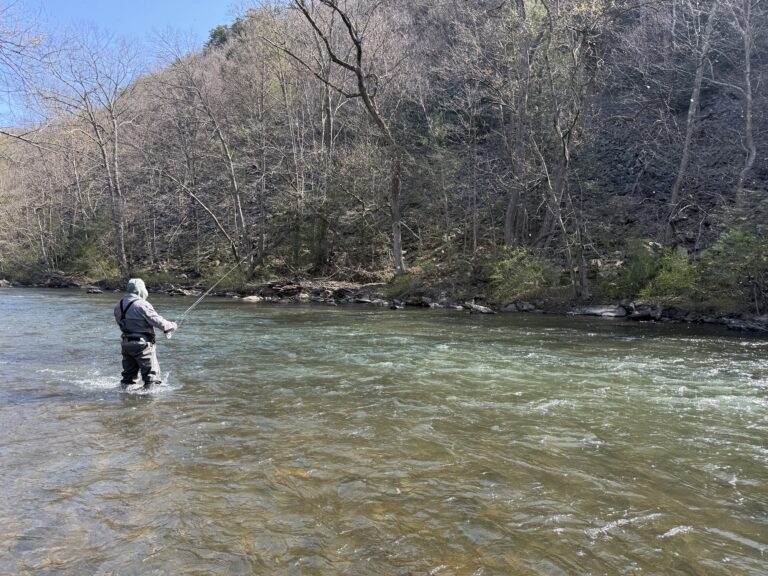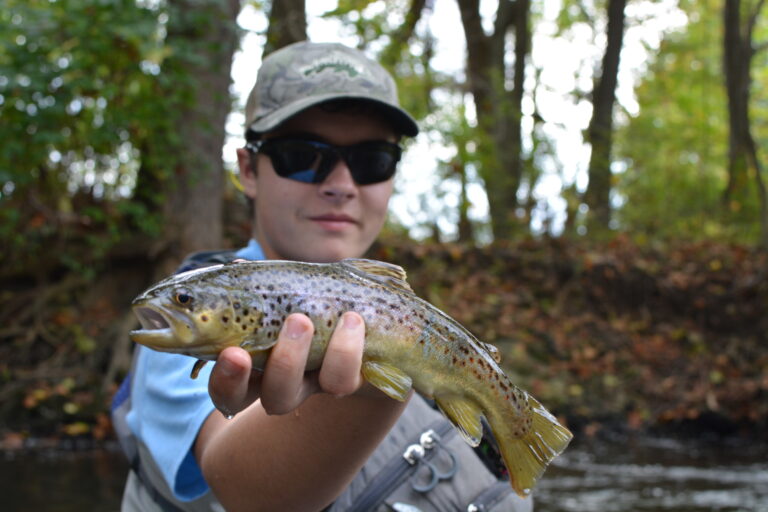

Wind is the mortal enemy of a good day euro nymphing. There is no worse or more difficult condition of fish through, period. It stunts your casts, makes it difficult to get slack into your presentations, and messes with your drift in a hundred ways. There’s no good way to deal with wind either, everything you can do is more triage than remedy. That being said, there are a few tricks to make fishing on a breezy day a bit more bearable. These are my five best tips for euro nymphing in the wind.
1.) Tighten Up Your Cast
Bad drifts almost always start with bad casts, and wind exaggerates every flaw. Micro leader systems that many of us are using these days are particularly susceptible because they have very little mass and can easily be blown off course.
The key to keeping things moving towards your target is to tighten your casting loop and minimize the cross-sectional area exposed to the wind. A more condensed, powerful casting stroke keeps the flies closer to the leader and allows you to punch through the wind more effectively. I have an article and video on this from last season that should help:
On a similar note, when possible, cast directly into the wind rather than across it. Casting across the wind opens up your leader and increases the surface area the wind can push against.
Wind also tends to pull slack out of the system before your flies hit the water, which can be an even bigger issue than casting distance. Instead of making a big high tuck cast with lots of hang time, try driving the flies and leader downward onto the water, piling the slack on top (example in the video). A more direct presentation gives the wind less time to interfere and helps maintain the slack needed for a good drift.
2.) Up Your Weight
Increasing fly weight is often the most reliable way to combat windy conditions. In a proper drift, your fly weight and the upward tension on your leader are balanced. When wind pushes against the leader, it adds extra upward force that can lift your flies off the bottom.
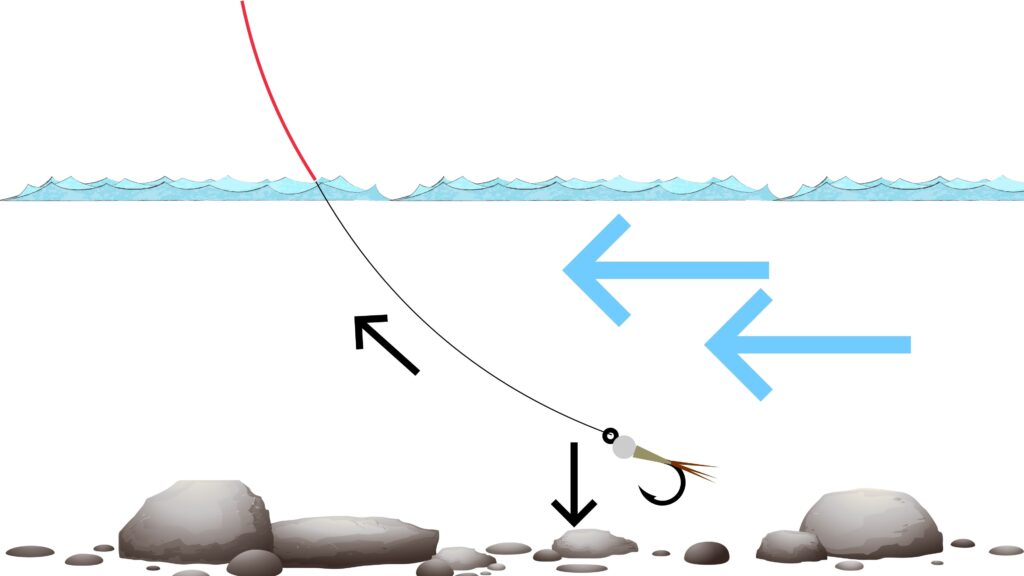
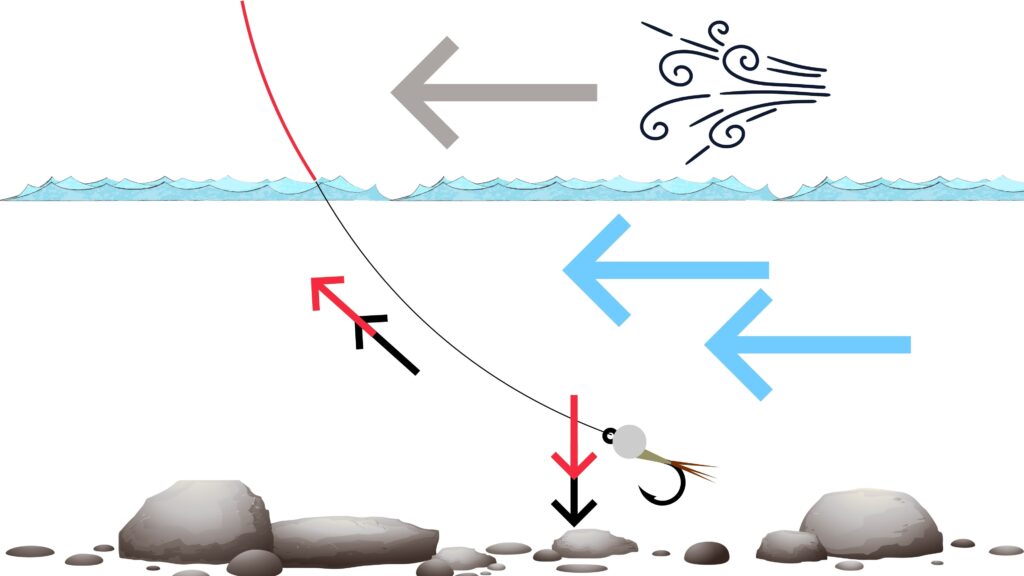
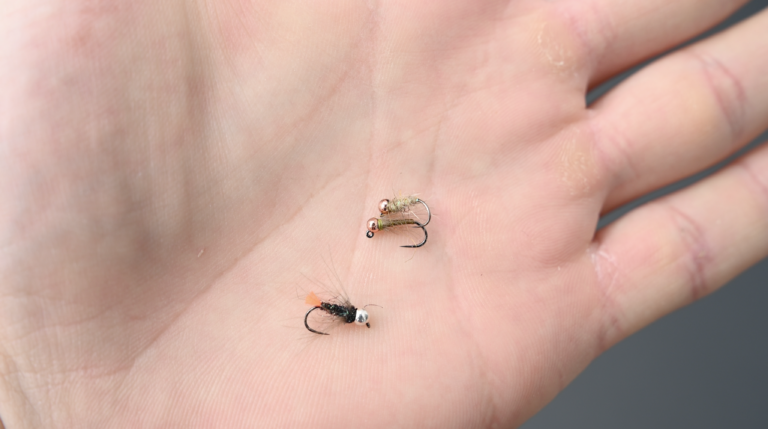
The simplest solution is going up one bead size (two if the wind is really bad), to maintain that equilibrium in the wind. Going heavier will likely increase snags and hangups, which can be frustrating in itself. This is especially problematic in intermittent winds when you don’t constantly have that increased upward force throughout the drift.
An effective option to add weight but spread it out to help minimize snags is switching to a two-fly rig. This distributes the weight more evenly instead of concentrating it in one fly that’s more likely to park itself on the bottom. For example, moving from a single 2.3mm fly to two 2.3 mm flies instead of a single 2.8 mm. The tradeoff is a slightly higher chance of tangles, but in certain conditions the improved drift can be worth it.
3.) Increase Your Leader Diameter
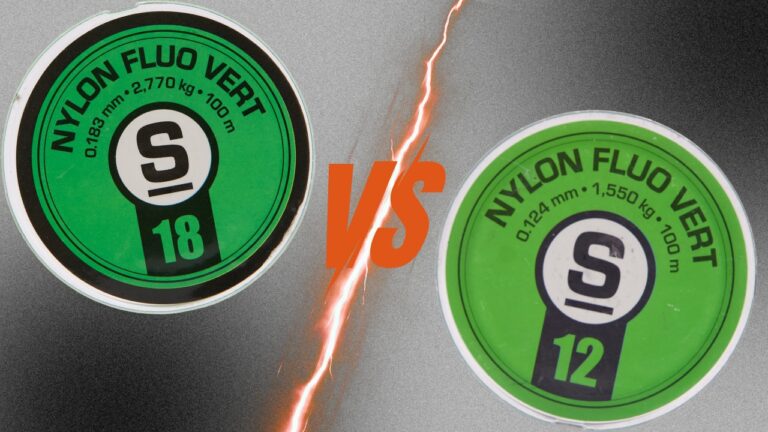
I discussed this in my most recent video and post about choosing the right micro leader diameter. Thicker micro leaders work better in windy conditions because their mass increases faster than their surface area. For example, moving from a 0.14 mm leader to a 0.18 mm leader increases surface area by about 1.7×, but mass increases by roughly 2.1×. This higher mass-to-surface-area ratio helps the leader hold steady and resist being blown around.
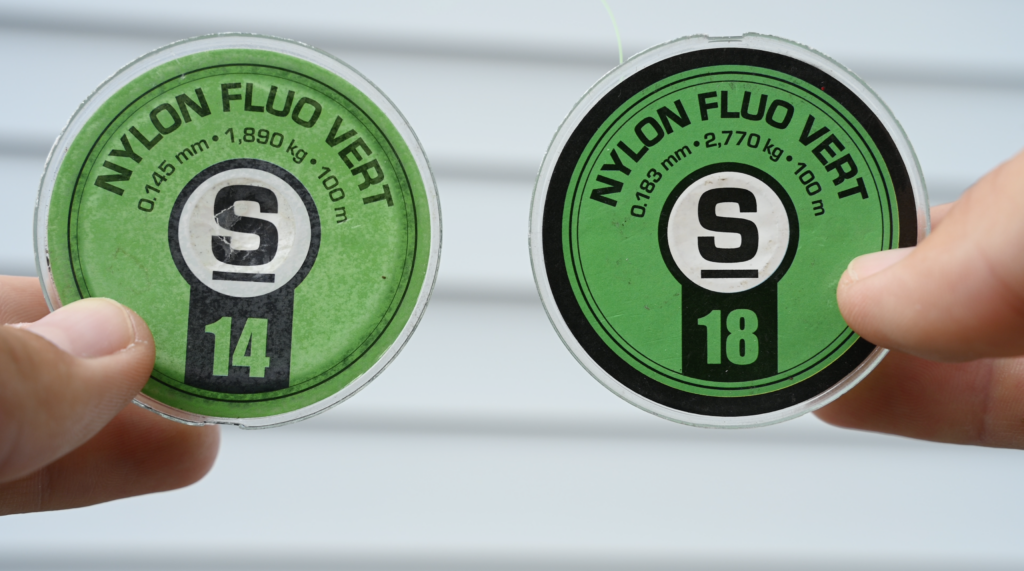
The added mass also helps you cast more effectively into the wind, while the slightly larger diameter will stick better in the surface tension when floating the sighter and hold better against a breeze.
The downside is increased leader sag, which reduces how far away you can fish effectively. Depending on the situation, that trade-off may or may not be worthwhile.
4.) Put Your Leader on the Water
If the wind is pushing your leader around, the simplest solution is to get it out of the wind entirely.
Anchoring your leader on the water, often called “sighter floating”, can provide you with a much better drift and presentation in windy conditions. In this setup, you watch the leader on or just under the surface for strikes while the water holds it steady.
You don’t necessarily need to place the entire leader on the surface. Anchoring just the tip can be enough to let your flies sink and establish depth before transitioning into a more traditional tight-line drift. Or, you can anchor the tip of the leader throughout the entire drift as a nice split between a true sighter float and a standard drift.
In some water types, you can achieve a similar effect by fishing a dry-dropper or indicator rig, which anchors the system to the surface and limits wind interference. These setups work well in certain situations where sighter floating doesn’t, like pocket water, but they also increase air resistance and can make casting more difficult.
5.) Keep Your Rod Tip Low
Another way to reduce wind interference is to keep your rod tip low during the drift.
The less leader you have suspended in the air, the less surface area the wind has to push against. This means finishing your cast with a lower rod tip and controlling line primarily with your line hand instead of lifting the rod. This technique works best when combined with anchoring the leader on the water via sighter floating, indicator, or dry dropper. With a low rod tip, you just don’t have the reach to hold your leader off the surface at much distance.
In lighter winds, a good strategy is to start with the rod tip low to help your flies sink, then gradually raise the tip once the flies have settled into the slower bottom currents. This is similar/related to what I discussed in tip 4 with sighter floating at the beginning of the drift and then picking up off the water into a more standard presentation.
Final Thoughts
Fishing in the wind is rarely pleasant, but it doesn’t have to ruin your day on the water. With a few adjustments, like tighter casts, heavier flies, thicker leaders, surface anchoring, and a lower rod tip, you can maintain effective drifts even in less-than-ideal conditions. None of these things are a full, sure fire solution, but they can at least help turn a tough day into a manageable one.
Tight Lines,
Mike Komara