
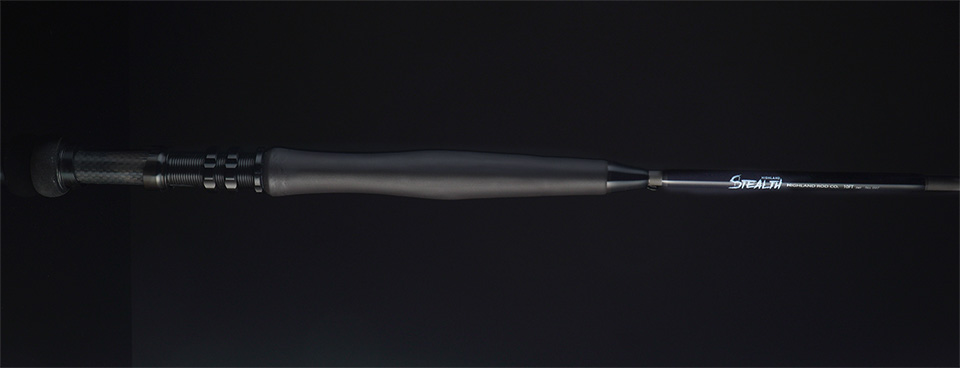

It’s not often these days that someone builds a fly rod company from the ground up, rolling their own blanks and assembling everything in house. It’s even less common that the products are truly innovative and can compete with the best rods currently on the market, but Roger Wilson and Highland Rod Company have done just that. Their flagship rod, the Stealth, has proven to be an exceptional euro rod finely tuned to the needs of advanced nymph fishermen and competitive anglers.
Roger sent me a 10’ 3 weight Stealth to test out last fall, and it quickly became one of my go-to’s, despite the fact that I generally prefer longer rods. I put it through the ringer in New Zealand with heavy rigs and massive fish, and tested it out here on our smaller Pennsylvania spring creeks. I also fished it through a recent competition to see how it held up when my technique was under stress. There’s a good reason this rod is a favorite of two thirds of the US World Team!
A Quick Look
Pro's
- High end hardware
- Innovate guide placement
- Snake guides on tip
- Lightning fast recovery and low vibration blank
- High stability when landing fish
- Great sensitivity and tip awareness
- Powerhouse with mid range weights and medium to large fish
Con's
- Not the best at casting 2mm or smaller weights
- No option for cork handles (only a con for some)
Value
Priced at $595, the Highland Stealth 10’3wt is the best general purpose, mid-price euro rod on the market right now, and one of the best overall. You get more for the cost than with many more expensive rods.
Fit and Finish
The Stealth is a sleek rod. It is built with all black components and a sanded raw carbon blank that reduces shine. The design manages to both stand out and blend in at the same time. You can recognize someone fishing a Stealth from far away, but the fish can’t.
From the Bottom Up
From the bottom up, the rod starts with a non removable high density foam fighting butt. It is stylish, low profile, and branded with the Stealth logo on the bottom. This was a nice touch when I was fighting larger fish in New Zealand because it gave me something softer to brace against my forearm. It also helps protect the butt of the rod from drops and dings.
Reel Seat
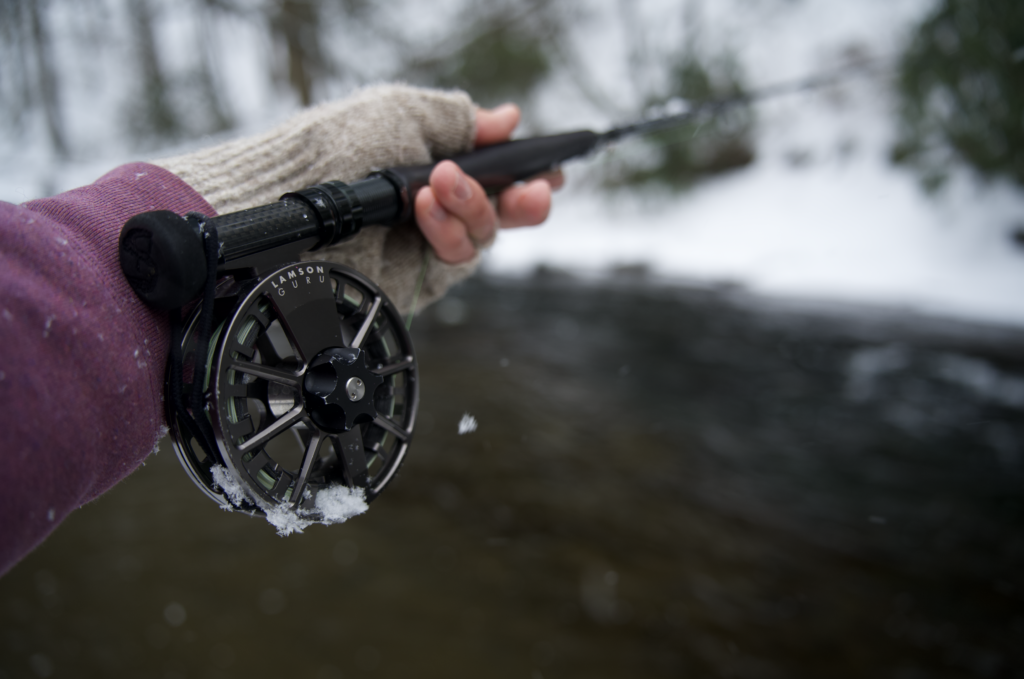
The reel seat is a down locking carbon and aluminum composite. It pairs nicely with the rest of the rod’s components and, as far as I know, is unique to Highland rods. The double locking rings and tight thread pattern have kept my reel secure and I have not had any issues with it loosening unexpectedly.
Rubber Composite Grip
The handle is the first and most eye catching feature that sets this rod apart from others. The Stealth is not offered with a traditional cork grip. Instead it comes with your choice of a smooth or textured “Katana” rubber composite grip.
Both grips are what I would consider skinny compared to a standard handle. I prefer this on a nymphing rod because it reduces strain on the inner wrist and provides a bit more control. On some of my other rods I actually sand the grips down to a profile similar to this.
I was sent the smooth grip, and so far it has been an improvement over traditional cork in my experience. I was skeptical at first, but the rubber provides noticeably more friction than cork, especially when wet. Because of this, I find myself holding the rod with a more relaxed grip throughout the day.
Some anglers dislike it for the same reason. A few have told me that the extra friction can rub against their skin and become uncomfortable over time. In my opinion this is often the result of over gripping the rod, but it is still something worth considering.
Some anglers have questioned how the long term durability will compare to cork. I can’t speak to that yet, but I plan to update this review after more time on the water. That said, Highland stands behind their products and I would expect them to address any premature wear issues if they arise
Guide Layout and Style
Above the grip, the rod includes a hook keeper, which is a nice feature that many rods seem to be dropping these days. The first two guides are ceramic strippers. From there the rod uses single foot recoil guides through the mid sections to reduce weight, finishing with snake guides near the tip to help prevent leader wrap.
One detail you may notice is that the guide spacing is not uniform. Instead, the spacing appears to be designed to apply pressure to specific areas of the blank. This helps accentuate the bend profile and improves the rod’s action when fighting fish. It is a thoughtful design choice that I have not seen on many other rods, and it seems to make a difference on the water.
The 10’ 3 Weight Stealth Blank
I prefer a one-rod-fits-all solution for both fishing and competition. I like a generalist rod that can handle a wide range of situations well, so I do not have to constantly switch setups. That is harder to find than you might expect! The 10’ 3-weight Stealth is one of only a few rods I have used that can comfortably cast a full range of fly weights, protect light tippets, and still fight fish effectively.
Swing Weight and Balance
The Stealth has a light, crisp swing weight that is on par with, or better than, most high-end 10-foot rods. Its highly progressive taper and very light tip shift more mass toward the butt and mid sections, creating a natural and comfortable weight distribution.
In hand, this translates to a rod that feels balanced and responsive throughout the cast. It pairs well with most standard 3 to 5 weight reels loaded with backing and a euro line, without requiring additional weight to achieve proper balance.
Recovery
I think of recovery in two parts: recovery rate and dead stop rate.
Recovery rate refers to how quickly the tip returns from the apex of its bend back to a relatively straight position. Dead stop describes how quickly the rod settles and stops oscillating after that initial rebound. Both are influenced by taper, materials, components, and setup.
The Stealth has an exceptionally fast recovery rate. It is one of the fastest I have experienced in any rod, which gives it a very crisp, responsive feel and helps produce clean, controlled casts. This quick recovery also helps maintain tension when fighting fish, especially during head shakes and sudden direction changes.
The dead stop recovery is also very good, though not quite at the level of some solid tip rods. It still outperforms most rods on the market though. I did notice a slight reduction in this after mono wrapping the rod, which makes sense given how light the tip section is.
Related Article: Spiral Wrapping your Euro Rod
Sensitivity
Sensitivity in fly rods is a hard quality to nail down. There’s no agreed upon definition or metric for it, just a subjective understanding. It’s combination of a bunch of different qualities that contribute to the feel, way more than just the speed of vibration through the rod as some companies define it.
It’s also a lot more than just bite detection: sensitivity is about feeling the tip position, how your rod movements affect the drift, and how the rod is moving during the cast. It’s incredibly hard to compare all that between rods.
The Stealth seemed to check all the boxes with flying colors. In my opinion it’s ranks in the top percentile of nymphing rods, beating out most of the mid priced rods I’ve tried and many of the high dollar ones as well. I can’t tell you it’s the most sensitive rod in the world, but it feels great to me and I have no complaints.
Action
The Stealth features a relatively stiff butt section that transitions into a softer tip. The taper is progressive but the deflection during casting has a relatively hard break (start) around a third the way up the tip-mid. This provides a lot of tippet protection on the hook set as that part of the rod normally takes a lot of the load when setting.
From the break to the tip top the deflection increases continuously, which gives it a nice flat profile on the cast, even with lighter flies.
While the tip is softer relative to the butt, the rod overall is not overly stiff. It has plenty of backbone, but it will still bend well into the mid section without excessive force. This makes it effective at protecting tippet during the fight while also handling stronger fish and absorbing aggressive runs or head shakes.
Under high load when fighting big fish, the rod bends to just above the handle, not into it, which is generally what you want to see.
How It All Works Together
Swing weight, recovery, balance, sensitivity, and action are all interconnected. They come from the taper, wall thickness, materials, and component choices working together as a system. Looking at each characteristic on its own never fully captures how a rod performs.
Overall, the 10’ 3-weight Stealth feels light in hand, crisp, and highly accurate. It offers excellent stability and top-tier recovery, along with a high level of feedback. The result is a rod that gives you a strong sense of control over both the cast and the drift.
How Does It Handle Fish?
Casting and fighting fish are two separate areas of performance, and excelling at both requires different, sometimes conflicting qualities. The Stealth manages to do both well. Its recovery speed, light tip, progressive upper bend, and supportive lower section all work together to create a very capable fish fighting rod.
Small Fish (8–10 inches)
The light tip really shines with smaller fish in the 8 to 10 inch range, which are especially important in competition settings. Because the tip deflects under very light load and recovers quickly, it helps maintain constant tension through quick head shakes and erratic movement.
That said, solid tip rods still hold a slight advantage at the very low end of this range due to their even softer and more responsive tips.
Average Fish (10–18 inches)
For fish in the 10 to 18 inch range, the Stealth is hard to beat. The combination of recovery speed and deflection profile makes it very effective at maintaining steady pressure without overloading the tippet or pulling hooks.
It has enough flex to protect light tippet, while still giving you control throughout the fight. I have fished 8X consistently with no issues. Of course, angler input still matters, but the rod makes it much easier to do things correctly.
Large Fish (20–25 inches)
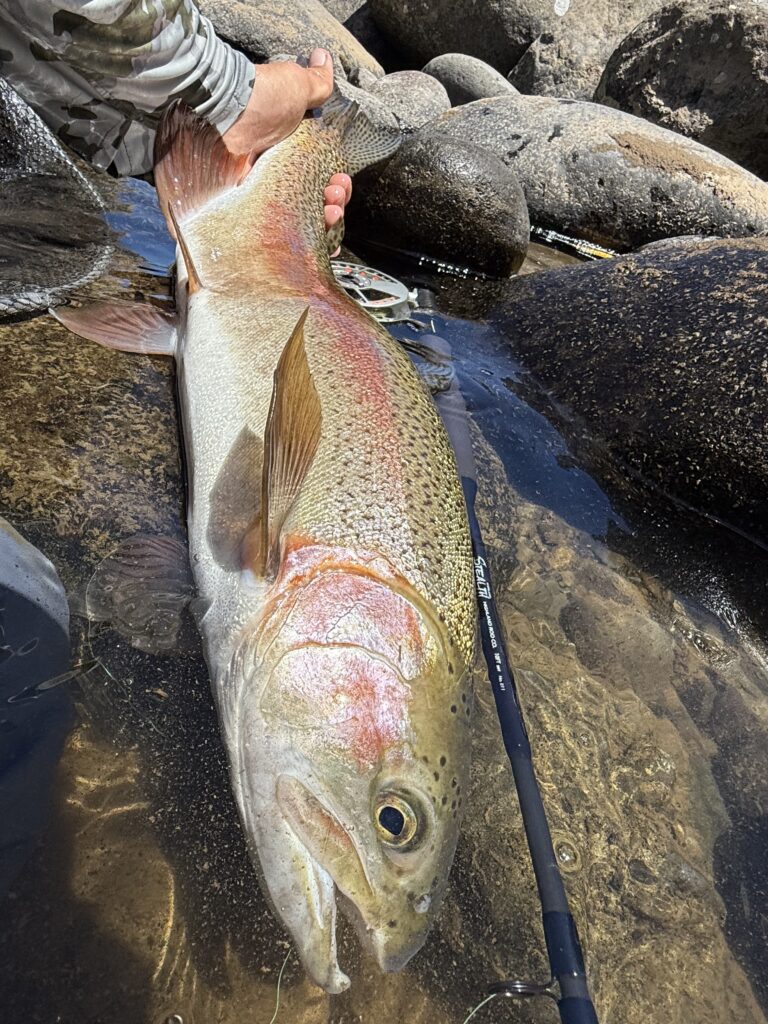
This is where the rod really surprised me. While fishing in New Zealand, I landed a number of fish in the 20 to 25 inch range, and the Stealth handled them better than many 10 foot 3 weight rods I have used.
Even when fishing 5X tippet and applying significant pressure in heavy water, the rod maintained a deep, controlled bend through the lower sections. This provided both power and shock absorption, which helped protect tippet and reduce break offs. Compared to the other nymphing rods I brought, I broke off noticeably fewer fish under similar conditions.
That said, if your primary focus is very large fish in the 24 to 30 inch range with heavier tippet, you may want a more specialized rod built for that purpose.
What is the Highland Stealth 10' 3 Weight Best At?
As I mentioned earlier, I tend to look for rods that can do a bit of everything. That said, every rod has a range where it truly performs its best.
For the 10’ 3-weight Stealth, that sweet spot sits right in the mid range. It excels with bead sizes from about 2.3 mm up to a double 3.5 mm rig, and with fish in the 10 to 24 inch range. Within that window, the rod feels extremely dialed in. It casts cleanly, maintains excellent control, and protects light tippet well thanks to its deflection profile.
In this mid range, the Stealth really stands out. It has the right balance of power and feel to handle a wide variety of situations without compromise. Whether you are fishing moderate currents, adjusting weight frequently, or targeting mixed size fish, it performs consistently and predictably.
It certainly handles things on either side of that mid-range, which is why I use it as an all around tool, it just doesn’t necessarily excel there. I would say it’s slightly better on the upper end with super heavy rigs (double 4mm, big jig streamers, etc) than on the extra light side (single 1.5-2mm nymphs). I threw a lot of double 4mm rigs in New Zealand and though the cast took a bit more thought and skill, the rod was able to really fire them out there. If I was constantly fishing big water and extra heavy rigs like that though, the 10’ 3 weight Stealth wouldn’t be my go-to.
The Stealth still casts light nymphs well, but it wasn’t as fond of 1.5-2mm flies (fishing with 0.14-.16mm Sempe micro leaders). 2-2.3 dry dropper rigs (depending on how bulky the dry was) were not its strong suit either. Again, it does all of those things well for an all around tool, but if you’re looking for something specifically tailored to the lighter end of the spectrum, or to landing very small fish, consider going for a more specialized rod like the 10′ 2wt Stealth or a solid tip option.
Final Thoughts
The Highland Stealth 10’ 3 weight is one of the main rods I use these days. It’s an awesome do-everything rod for handling any situation and rig. It’s light in hand and crisp to cast with a crazy fast recovery. It’s an exceptional fish fighting tool for any size catch, and can handle big fish and light tippets better than a lot of rods in its class. If you find yourself consistently fishing super heavy or light rigs, or needing to land every very small fish you hook, you may want to look for a more specialized rod. If you want an all around tool that is exceptional at most things and solid at the rest, this is the rod for you.
Buying via these affiliate links helps support me and the site, and I always appreciate it!
Bias Disclosure: I was gifted this rod for free, and am friends with the owner of the company. However, I always strive to write accurate and honest reviews, and show all the pro’s and con’s of the gear I use to do my readers and the product right.
I got my 10’ 3 wt. late September and I really like fishing with it. I can’t wait till this weather in Pa. Get better.