
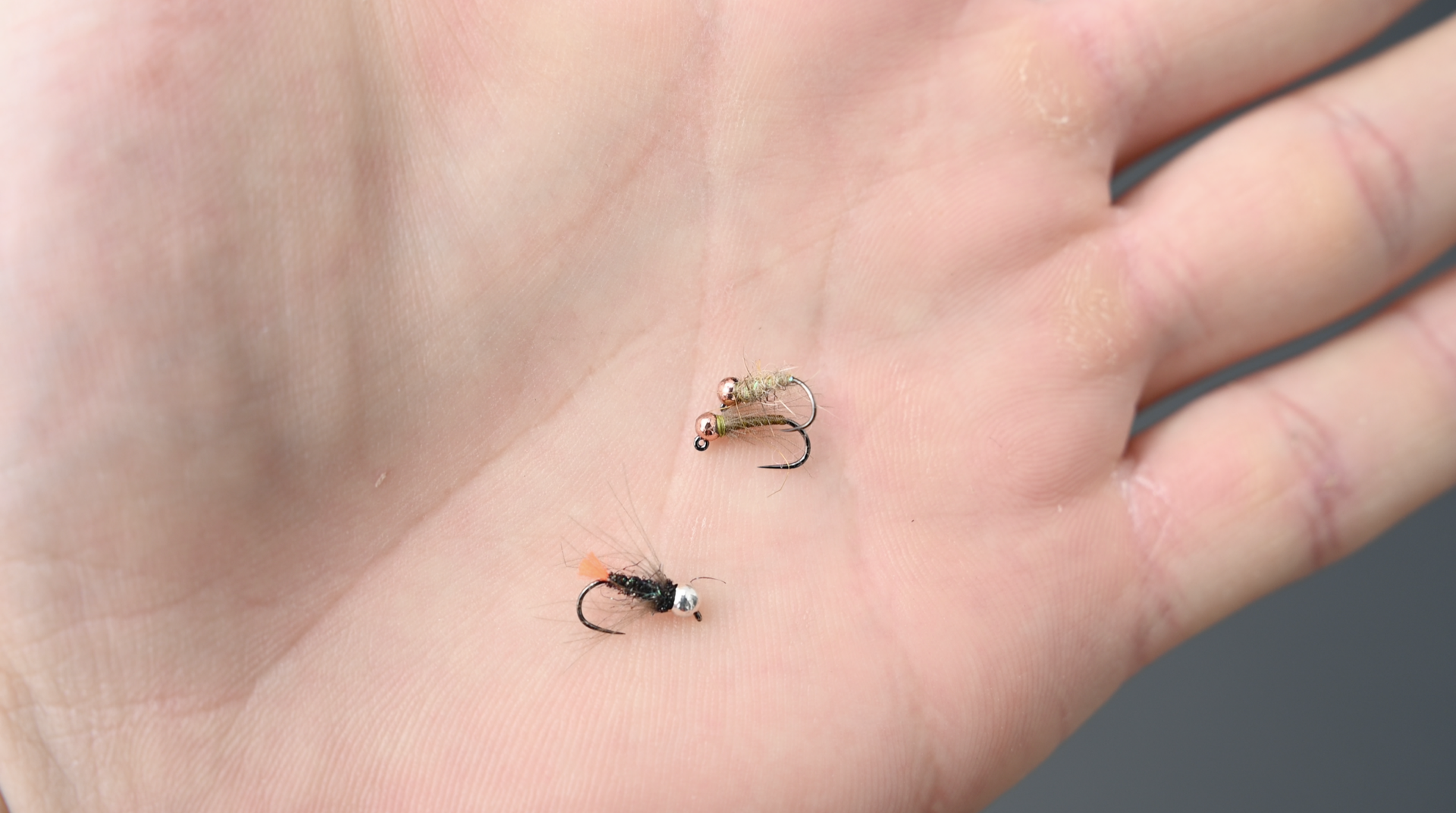

A debate I’ve heard on and off since I started fly fishing is whether to use a trailer rig with the heavy fly as a dropper, or a standard rig with it on point. Most anglers tend to prefer the heavy fly on the bottom, but a good portion still use a trailer system, at least in certain situations. The trailer rig keeps both flies closer to the bottom, but it comes with more sacrifices than benefits. Personally, I never use trailer rigs anymore, because I believe that in virtually any situation you encounter, a single weighted fly or a standard rig will be more effective.
What Is a Trailer Rig and Why Is It Used?
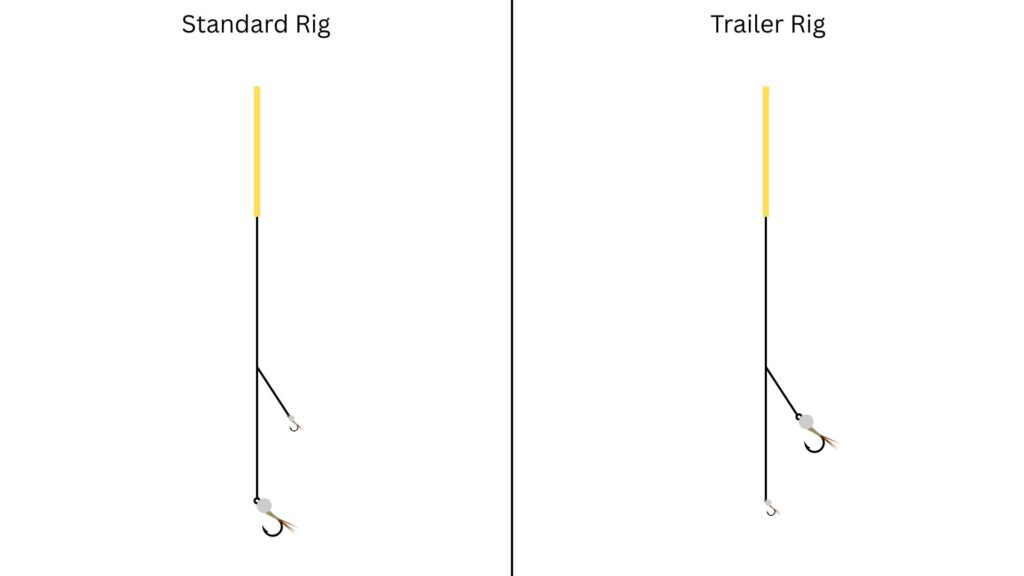
A trailer rig, as mentioned above, is when you position your heavier fly above (closer to the fly line) a lighter or unweighted fly on your tippet. The lighter fly can be tied inline off the eye or bend of the heavier fly, or off a tag.
A “standard rig,” at least in euro nymphing, places the heavy fly on the bottom (point position), with a lighter fly above it as the dropper.
When fishing a trailer rig, the heavy fly anchors the system near the bottom, and the trailer follows behind at roughly the same level. This allows you to fish a light or unweighted pattern deep in the water column, which can be useful for achieving a more natural drift or getting very small flies down where fish are feeding.
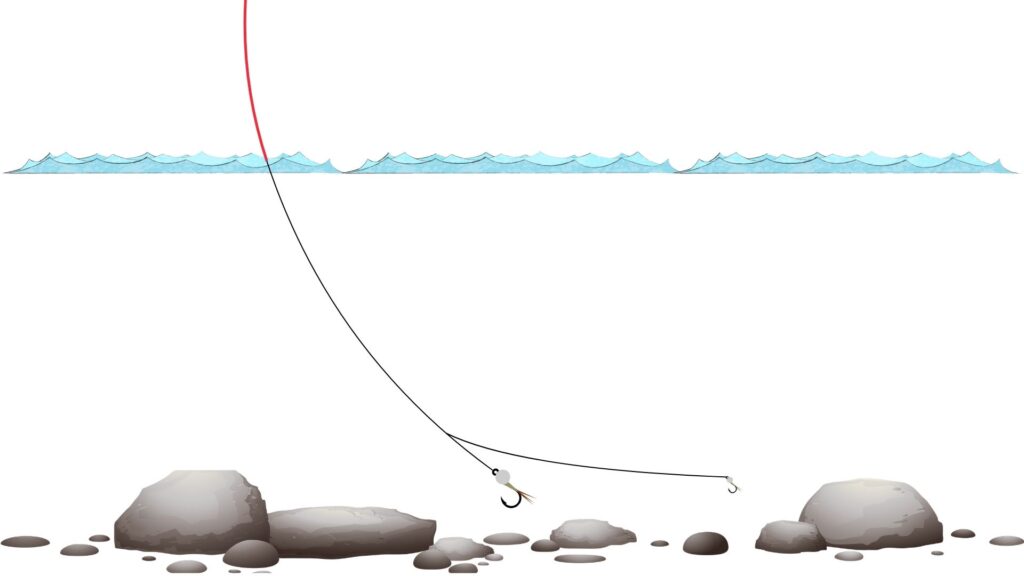
Conventional wisdom says that in a standard rig, the heavier fly anchors on the bottom while the lighter fly rides higher in the water column along the natural curve of the tippet up to the sighter. The assumption is that you can’t effectively fish the lighter fly close to the bottom with this setup.
What Are the Drawbacks of the Trailer Rig?
The trailer rig certainly works to get a small fly drifting along the bottom. However, it also significantly reduces your ability to detect strikes.
The heavy fly in between your trailer and sighter or indicator acts as a dampener. When a fish eats the trailer, it has to move the anchor fly before anything registers on the sighter. On days when fish are eating aggressively, this may not matter. But when takes are subtle, you’ll often be late on the hook set—or miss the strike entirely.
The trailer rig also doesn’t track well. The anchor fly typically follows the current and leader as expected, but the trailer, free to move around, doesn’t always follow the same path. In certain currents, even ones that appear fairly uniform, the trailer can end up to the side of or even above the anchor fly.
This creates two problems:
- It can introduce unnatural drag if the currents diverge.
- It can add slack, further reducing strike detection.
And because the heavy fly sits between the trailer and your sighter, you often have no real feedback on what that trailing fly is doing during the drift.
What’s the Better Option?
The reality is that a standard rig can do everything a trailer rig can do—only better. The key is controlling slack.
Most diagrams show a standard rig with the heavier fly on the bottom and the dropper riding higher in the column. That depiction isn’t wrong—but it reflects a specific level of tension, tippet length, and sighter angle.
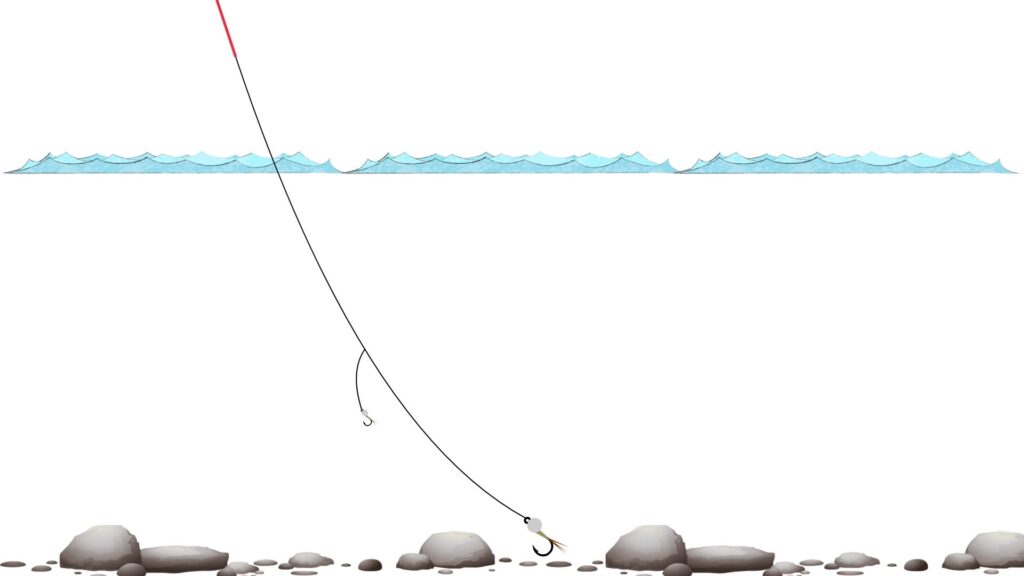
By adjusting your drift, you can control the depth of your dropper and position both flies near the bottom, regardless of weight. This primarily comes down to managing slack.
When your heavier fly anchors in the bottom currents, your tippet naturally wants to align with it downstream. The only thing holding the rest of the system up in the water column is the tension you apply. By easing that tension and placing more tippet under the surface, you can change the equilibrium position of the dropper fly in the current.
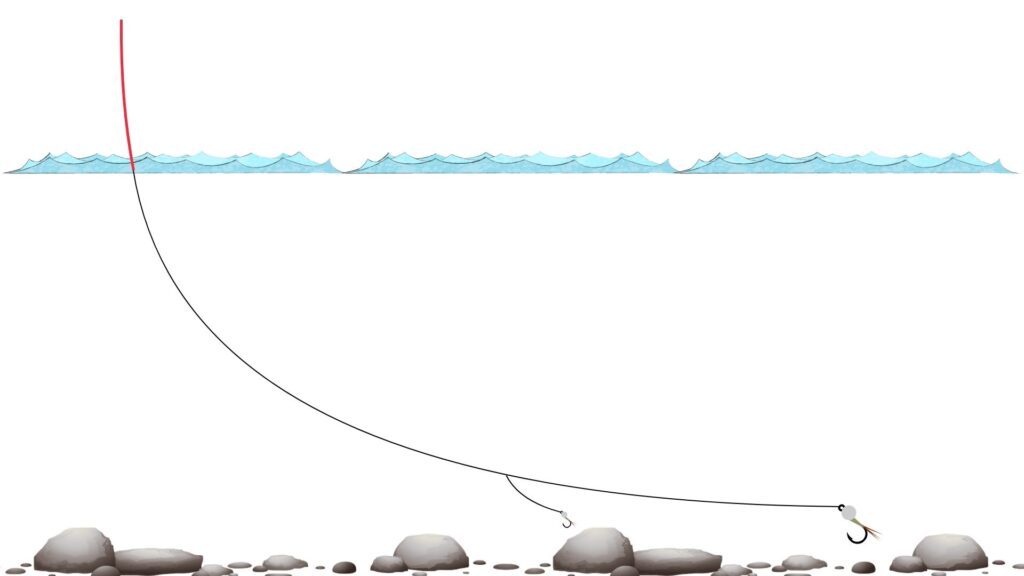
Using this method, you do have more slack, but you remain in decent contact with both your flies. You also help them track straighter, although there is more play than on a tight drift. Strikes register surprisingly well even with larger amounts of subsurface tippet due to the viscosity of the water.
Final Thoughts
A trailer rig does what it’s designed to do, but it comes at the cost of strike detection, drift control, and overall awareness of your flies.
It will still catch fish—no question. But as a general approach, a standard rig is more effective and more versatile.
With proper slack control, you can achieve the same depth while maintaining better contact and cleaner tracking. It takes some practice to dial in, but in the long run, it will put more fish in the net.
Give it a try and let me know your thoughts!
-Mike Komara




Yup
Yup
On standard rig when you want both flies near the bottom as shown in the last illustration, how do you determine how much more tippet to use to sink that tippet and get both flies low?
It’s pretty situational, but there are some signs to look for in the sighter. A bit too hard to explain in writing though.
Great note! Love the visual subtleties even in releasing the tension a bit! Do you ever float the sighter to release some of the tension?
I definitely will, especially with light flies. It does depend a lot on how the fly enters though, without enough slack at the beginning a sighter float presentation will stay tight throughout the drift.